What a newborn needs: a list for the first month
Before the birth it is easy to buy too much and forget what matters. Here is a calm list for the first month: what you will really use, how many of each and what you can do without.
Contents 10 sections
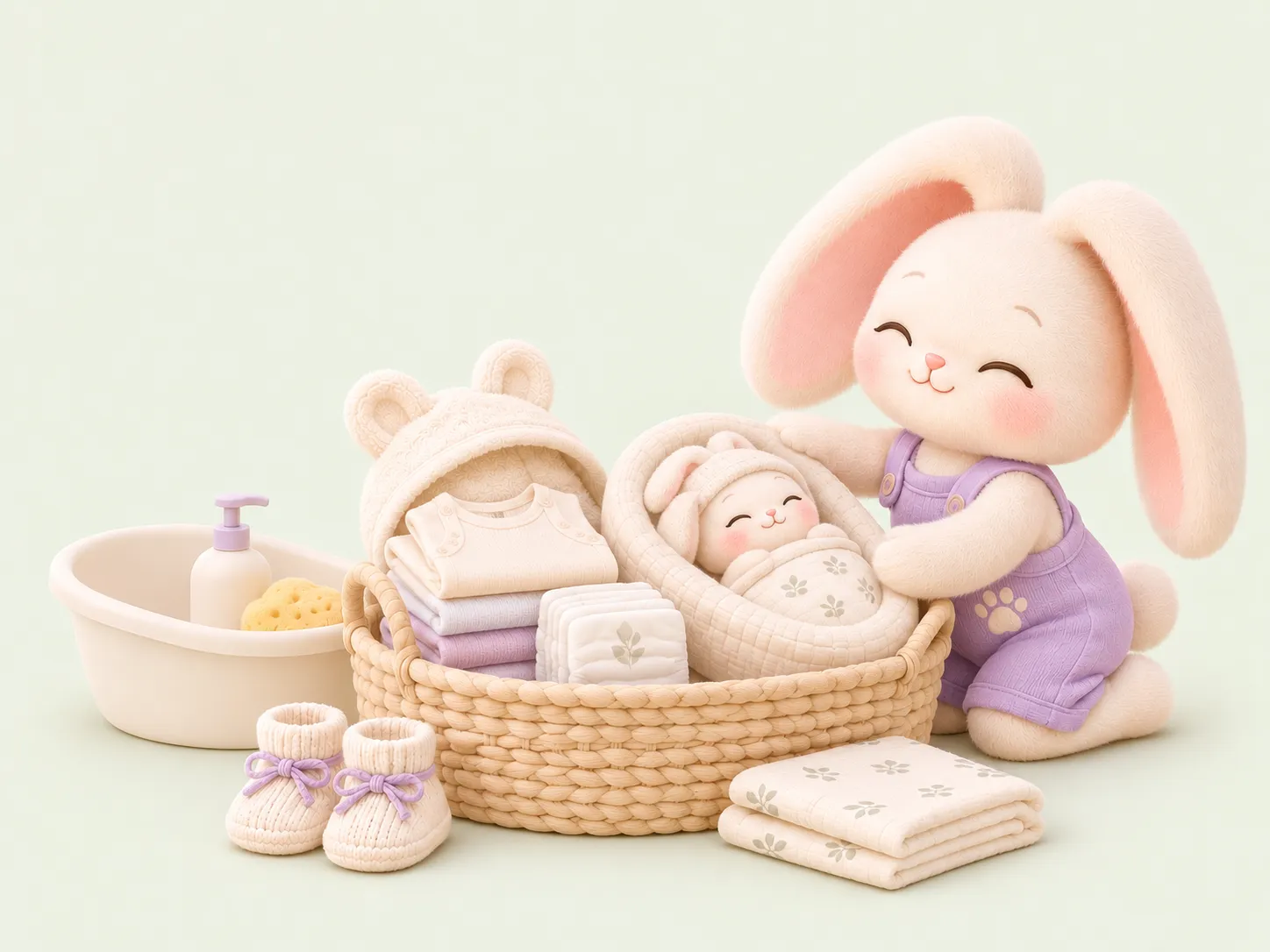
For the first month a newborn needs: a separate cot with a firm flat mattress and at least 4 fitted sheets, a sleeping bag or swaddle bag for the season, at least 6 sleepsuits and as many bodysuits in sizes 56-62, newborn nappies (at first a baby needs changing as many as 10-12 times a day), a baby bath and a towel, and a rear-facing car seat for the trip home. Pillows, bumpers, a cot blanket and sleep positioners are not needed before the age of one.
Newborn Essentials Checklist
One A4 sheet with tick boxes: print it or save it on your phone and check off what is ready.
Sleep
For the first 6 months a baby sleeps in a separate cot or Moses basket in the parents' room. That is the NHS advice.
- A cot or basket with a firm flat mattress that fits the frame with no gaps.
- A new mattress. The cot can come from family, but the NHS advises buying a new mattress.
- At least 4 fitted sheets, so there is always a clean one.
- 1-2 waterproof mattress protectors under the sheet.
- 2 sleeping bags or swaddle bags of the right warmth. How to pick the TOG for your room is in our article on sleeping bags and TOG, and when a swaddle bag makes sense, in our article on a cocoon for a newborn.
Keep the room at 16-20 °C. A pillow, blanket, bumpers, soft toys and positioners don't belong in the cot before the age of one: the baby sleeps on their back in an empty cot. All about it in our article on safe sleep for babies.
Clothing and sizes
The size on the label equals the child's height in centimetres. Most babies are born into size 56 but outgrow it within a few weeks, and big babies wear 62 from the start. So take a few things in 56 and most in 62. How to work out the size is in our children's clothes size chart.
- At least 6 sleepsuits: the baby wears them both asleep and awake.
- 6-8 bodysuits with long and short sleeves.
- 2 warmer cardigans for cool days.
- 2-3 thin hats for going out. Take the hat off indoors and for sleep.
- 4-6 pairs of socks and 2 pairs of scratch mittens.
- Outdoor clothes for the season: a bunting bag or a snowsuit. How to dress a baby in winter is in our article how to dress a baby in winter.
Wash new clothes before the first wear, on a gentle 30 °C cycle with a fragrance-free detergent.
More on what is what, which fabrics to choose and how to dress the baby for the weather, in the article on a newborn's basic wardrobe.
Nappies and changing
The NHS says a newborn may need changing as many as 10-12 times a day. Over a month that is roughly 250-300 nappies, but don't buy them all at once: the size changes quickly, and some brands don't suit some babies.
- Newborn nappies, 1-2 packs to start.
- Cotton wool and warm water or fragrance-free, alcohol-free baby wipes.
- Nappy cream, if the skin gets red.
- 6-10 muslins, best in muslin cloth: to lay under, dab and put on your shoulder after feeds.
- A changing mat on a chest of drawers or a table. Never leave the baby alone on it, even for a moment.
How to choose the nappy size, how many muslins to get and how to swaddle without harming the hips, we cover in the article on nappies and muslins for the first month.
Bathing and daily care
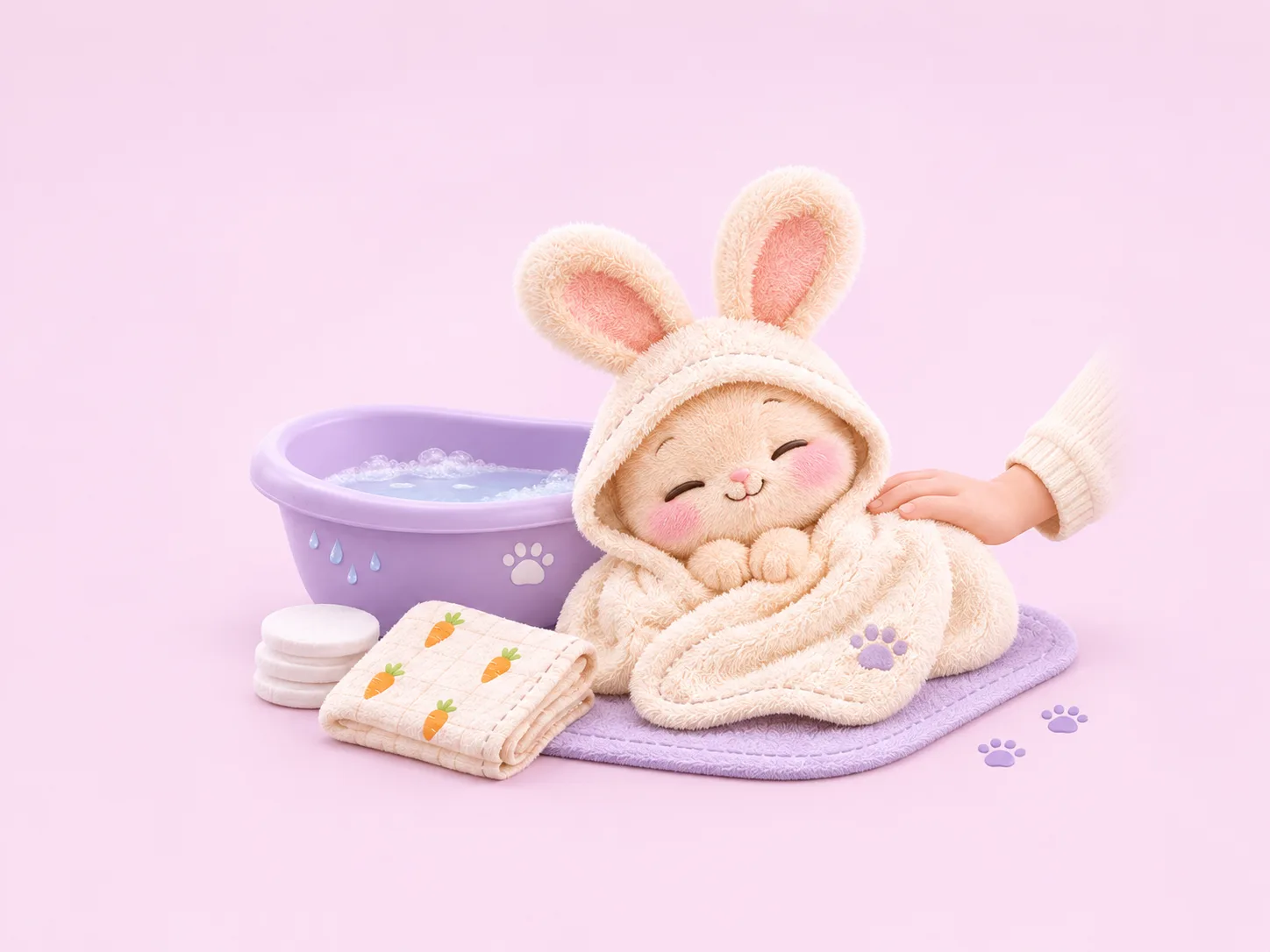
Until the umbilical stump has healed, the baby isn't put into water but washed with cotton wool. You will need the bath once the cord area has healed. Step by step in our article on bathing a newborn.
- A baby bath and, if you like, a bath support or seat.
- 2 hooded towels.
- Two small bowls for washing: one for the face, the other for the nappy area.
- Round-tipped scissors or a baby nail file.
- A digital thermometer for the baby.
- A basket for care products, so everything is to hand.
Feeding
What you need depends on how you feed. Nothing here needs buying in bulk in advance: see how it goes first.
- Breastfeeding: 2-3 nursing bras, breast pads and, if you like, a nursing pillow. The pillow is only for feeding: the baby must not sleep on it.
- Formula: bottles and teats, a bottle brush, the formula your paediatrician recommends, and sterilising as the maker says.
- Bibs and muslins for your shoulder when you hold the baby upright after feeds.
Going out and the trip home
- A car seat. A newborn goes home from hospital in a rear-facing infant carrier, even in a taxi. The NHS advises buying the car seat new, and taking a used one only from family whose history you know. What Ukraine's traffic rules say is in our article on a going-home outfit.
- A pram with a carrycot, where the baby lies flat.
- A rain cover and a mosquito net for the season.
- A sling or a newborn carrier, if that suits you.
For mum
A mum needs her own things in the first month too: maternity pads, comfortable clothes that open at the front, nursing bras. What to take to the hospital is in our hospital bag list.
And agree on help in advance: who cooks, who gets up to the baby at night. Ideas for sharing the load are in our article on how a dad can help after the birth.
What you can skip
- A pillow, blanket and bumpers for the cot. They aren't needed before the age of one and are unsafe for sleep.
- Sleep positioners. Paediatricians advise against them.
- Lots of size 56. Two or three sets are enough.
- Shoes. They come in once the baby starts walking.
- Powders, lotions and oils just in case. In the first weeks plain water is enough for a newborn's skin.
- Whatever comes in the Baby Box. If you take the box, see what is in it first. How to get the box or the 8 451 UAH compensation is in our article on the Baby Box.
Many things can come from family or second-hand: clothes, a baby bath, a pram. The mattress and the car seat should be new. What else not to buy used is in the rules of Things from Mums.
The list is general and based on NHS and AAP advice. Talk to your paediatrician if your baby was born early or has special needs.
Questions and answers
How many bodysuits and sleepsuits does a newborn need?
The NHS suggests at least 6 sleepsuits, and parents usually take 6-8 bodysuits. If you wash daily you need fewer, if every few days take more.
What clothes size should you buy for a newborn?
A few things in size 56 and most in 62. The size equals height in centimetres: most babies outgrow 56 within a few weeks, and big babies wear 62 from the start.
How many nappies do you need for the first month?
About 250-300: at first a baby needs changing as many as 10-12 times a day. Buy 1-2 packs to start with, as the size changes quickly.
Does a newborn need a pillow?
No. Until the age of one a baby sleeps on their back on a firm flat mattress, with no pillow, blanket or bumpers.
What should cover a newborn at night?
Nothing: instead of a blanket the baby sleeps in a sleeping bag or swaddle bag of the right warmth. It can't be kicked off or pulled over the face.
What temperature should a newborn's room be?
16-20 °C, as the NHS advises. The sleeping bag's warmth is chosen for that temperature.
Does a newborn need a hat indoors?
No. A hat is for going out; take it off indoors, in the car and for sleep so the baby doesn't overheat.
What can be second-hand and what is better bought new?
Clothes, a baby bath and a pram can be second-hand. The NHS advises buying the mattress and the car seat new, and taking a used car seat only from family whose history you know.
What to buy in advance and what later?
In advance: the cot and mattress, sheets, a sleeping bag, a few sets of clothes, starter nappies and the car seat. The rest, like clothes to grow into and feeding things, you buy once you see what you need.
What on this list is in the Baby Box?
The box has clothes, a blanket, a mattress, a towel, nappies, muslins and hygiene products. Check its contents before you shop so you don't buy twice.
Sources
- NHS: What you'll need for your baby
- NHS Best Start in Life: What to buy for your newborn baby
- NHS: How to change your baby's nappy
- NHS: Reduce the risk of sudden infant death syndrome (SIDS)
- NHS: How to dress a newborn baby
- HealthyChildren.org (AAP): A Parent's Guide to Safe Sleep
- HealthyChildren.org (AAP): Car Seats: Information for Families