Swaddle Pod for a Newborn: Why Use One, How to Choose It and When to Stop Swaddling
A swaddle pod helps a newborn who is woken by their own arms to fall asleep. Here is what pediatricians and orthopedic specialists say about swaddling, how to choose a pod by size and fabric, and when to put it away.
Contents 11 sections
- What a swaddle pod is and how it differs from a swaddle blanket
- Why swaddle at all
- Free legs: keeping the hips healthy
- Safety rules
- How not to overheat your baby
- Velcro, zip or arms up
- How to choose a swaddle pod
- When to stop swaddling and what comes next
- Checklist before sleep in a swaddle pod
- Questions and answers
- Sources
A swaddle pod is a pouch for swaddling that closes with Velcro or a zip: it holds the arms and does not come undone at night. A swaddled baby is placed only on the back, the legs inside must be free to bend up and out, and the pod never goes above the shoulders. Keep the room at 16-20 °C, no hat. As soon as your baby tries to roll, which can happen as early as two months, stop swaddling and switch to a sleeping bag with the arms out.
Swaddle Pod Sleep Checklist
One A4 sheet with tick boxes: print it or save it on your phone and check off what is ready.
What a swaddle pod is and how it differs from a swaddle blanket
A swaddle pod, or swaddle sack, is a ready-made swaddle that you do not need to know how to fold. You place your baby inside with the arms along the body or near the face, and fasten the wings with Velcro or a zip. The bottom stays loose, like a sleeping bag.
Classic swaddling with a blanket works too, but it takes practice. Wrap too loosely and the fabric comes undone and can end up near the face at night. Wrap too tightly and it presses on the chest and hips. A pod already has its size and shape set, so both mistakes happen less often. For a swaddle blanket, choose thin muslin rather than a blanket or throw: that is the advice of the UK charity The Lullaby Trust.
The three most common types: wings with Velcro that wrap the arms; a zip, often with a second zip at the bottom for diaper changes; and designs where the arms rest up near the face.
Free legs: keeping the hips healthy
Babies used to be swaddled tightly, with the legs straight and pressed together. Orthopedic specialists now warn against it. The International Hip Dysplasia Institute (IHDI) says that swaddling with the hips and knees straightened increases the risk of hip dysplasia and dislocation.
In the first months the hip joints are still forming, and a baby's natural position looks like a frog: knees bent, hips spread. A good pod keeps that position. The legs sit in a loose pouch where they can bend, spread and kick.
It is easy to check. Fasten the pod and see whether your baby can pull the knees up to the tummy and spread them. If the fabric pulls the legs down, the pod is too small or too narrow at the hips.
Safety rules
- Back only. A swaddled baby is never placed on the tummy or side, at night or during the day.
- Not tight on the chest. The AAP advises leaving room for two or three fingers between your baby's chest and the fabric.
- Not above the shoulders. The pod does not cover the neck, chin or head, and has no hood.
- A separate crib. The Lullaby Trust advises against swaddling if your baby shares a bed with you, and when they have an infection or a fever.
- No weights. The AAP advises against weighted swaddles, sleeping bags and blankets: they press on the chest and lungs.
- Nothing on top. No blanket or throw goes over the pod, it already is the blanket.
A word about travel. Car seat harness straps must go between the legs and sit snugly against the body, so a baby is not put in a car seat in a swaddle pod. In a sling or carrier the legs should also be spread, and a pod gets in the way.
How not to overheat your baby
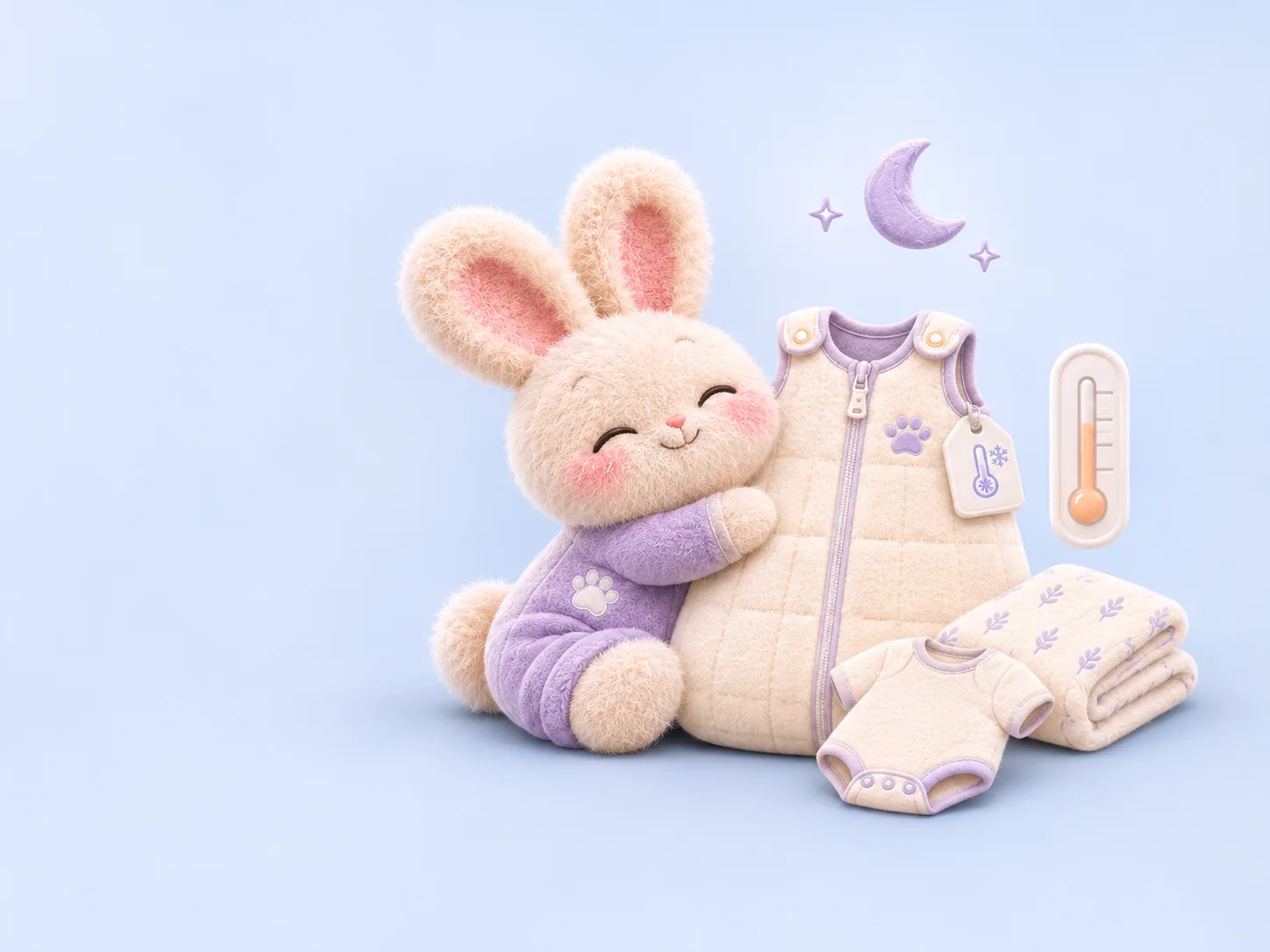
A swaddle pod is a full layer of clothing. Underneath, a short or long-sleeve bodysuit is usually enough, depending on the room temperature.
The Lullaby Trust advises keeping the room where your baby sleeps at 16-20 °C. Check warmth on the chest or the back of the neck: babies' hands and feet are cooler, and that is normal. No hat is needed indoors.
Signs of overheating, per the AAP: sweaty skin, damp hair, flushed cheeks, heat rash and rapid breathing. If you see them, remove a layer under the pod or choose a thinner fabric. We explain how to pick the right warmth for sleep in our article on TOG.
Velcro, zip or arms up
Health organizations see these products differently. The AAP and The Lullaby Trust give no advice on fasteners, and the UK charity says plainly that it cannot comment on the safety of individual products: it advises checking that a pod meets safety standards and fits your baby. Australia's Red Nose is more cautious and advises against products that hold the arms in with Velcro or a zip.
What to take from this in practice. Velcro lets you adjust the fit to your baby, which helps while they are small and growing fast. But holding the arms in only makes sense in the first weeks, while the Moro reflex is strong. A bottom zip is handy at night: you change the diaper without freeing the arms. Arms-up designs suit babies who like to bring their fists to their mouth. According to the AAP, there is no evidence that arms in or out affects the risk of sudden infant death.
Our swaddle pod closes with Velcro, is made of cotton with elastane, and fits from 0 to 3 months. Fasten it so that two or three fingers fit between the chest and the fabric, and put it away as soon as your baby starts to roll.
How to choose a swaddle pod
- Size by weight and length, not just by age. A pod that is too big comes undone and the arms slip out; one that is too small presses on the hips.
- Breathable fabric. Cotton or muslin, with a little elastane for a soft fit. Synthetics and thick fillings make it too warm.
- A loose bottom. A pouch for the legs, not a narrow tube.
- A neckline below the chin, with no hood or ties.
- Easy diaper changes. A bottom zip or an open bottom lets you change the diaper without unwrapping the arms.
How many you need: two. One on the baby, one in the wash, because spit-up and diaper leaks happen even to the tidiest parents. Before first use, wash the pod at 30 °C with a baby detergent.
When to stop swaddling and what comes next
The main signal: your baby tries to roll. According to the AAP, this usually happens at 3-4 months, and some babies start as early as two. A swaddled baby who rolls onto the tummy cannot push up with the arms and lift the head. So stop swaddling at the first attempts, even if the pod still fits.
There are other signs that it is time. Your baby frees the arms every night, the Moro reflex fades noticeably (Red Nose says at around three months), and your baby falls asleep better with the fists near the face.
Next, a sleeping bag with the arms out is a natural step: it keeps your baby just as warm and cannot be kicked off or pulled over the face. If your baby is not rolling yet but already frees the arms, some parents leave one arm out for a few nights and then both. If your baby is already trying to roll, free both arms at once. Our Cloud Sleeping Bag comes in size 0-3 mo, so you can switch any night.
Checklist before sleep in a swaddle pod
- Baby lies on the back
- Two or three fingers fit between the chest and the pod
- The legs can bend up and out
- The pod sits below the shoulders, the face is uncovered
- Nothing in the crib but the baby, and no blanket on top
- The room is 16-20 °C, no hat
- Your baby is not trying to roll yet
This article explains general recommendations and does not replace advice from your pediatrician. If your baby was born early, has hip dysplasia or other health conditions, decide together with your doctor whether to swaddle.
Questions and answers
Do I need a swaddle pod if my baby sleeps well?
No. Swaddling helps babies who are woken by their own arms. If your baby sleeps calmly, you can go straight to a sleeping bag with the arms out.
Until what age can I swaddle?
Until your baby tries to roll. The AAP gives 3-4 months as the usual age, but some babies start at two. The pod's size is not the guide here: stop at the first attempts to roll.
How many swaddle pods should I buy?
Two: one on the baby, one in the wash. You rarely need more, because a pod is only used for a few months.
Can I put a blanket over the swaddle pod?
No. The pod already keeps your baby warm, and a blanket can slide over the face and cause overheating. If the room is cool, add a layer under the pod: a long-sleeve bodysuit or a thin sleepsuit.
What if my baby keeps wriggling out of the pod?
First check the size: arms slip out of a pod that is too big. If the size is right and your baby still gets free, they may be more comfortable with the arms out, and it is time to try a sleeping bag.