Going-Home Bunting Bag in Winter: How to Dress Your Newborn and Get Home Safely
Going home in winter means a few minutes in the cold and half an hour in a warm car. Here is how to dress your baby for both parts of the trip, why the bunting bag goes over the car seat straps rather than under them, and what pediatricians and Ukraine's traffic rules say about it.
Contents 10 sections
- Bunting bag, blanket or snowsuit
- How to dress your baby: one layer more than you
- Car seat: the bunting bag goes over the straps, not under them
- What Ukraine's traffic rules say
- How not to overheat your baby in the car and at home
- How to choose a going-home bunting bag
- The bunting bag after going home
- Checklist for going home in winter
- Questions and answers
- Sources
In winter, your baby needs one more layer than you: a bodysuit, a warm sleepsuit, a hat, and a bunting bag on top. In the car, buckle your baby into the infant car seat without the bunting bag and without puffy clothing under the straps, then lay the bunting bag or a blanket on top of the buckled straps. As soon as the car is warm, take off the top layer and the warm hat. Under Ukraine's traffic rules, a child shorter than 145 cm may only travel in a child restraint system, and taxis are no exception.
Going Home in Winter Checklist
One A4 sheet with tick boxes: print it or save it on your phone and check off what is ready.
Bunting bag, blanket or snowsuit
A going-home bunting bag is a padded sack or zip-up blanket you carry your baby out of the maternity hospital in. There are a few kinds: the classic bunting bag with a bow, a convertible blanket that opens out flat, and a winter snowsuit with legs.
For going home in winter, a bunting bag that unzips all the way is more practical. You can open it out, put your baby in the infant car seat without it, and then lay it on top like a blanket. A snowsuit is warmer on a walk, but in the car it has the same problem as an adult's puffer jacket: it gets in the way under the straps.
Our going-home bunting bag is a transitional one, made of satin with lace and synthetic padding, and it opens out into a blanket. The bow comes off so it does not get in the way in the stroller later. In frost, add a warm layer underneath; more on that below.
How to dress your baby: one layer more than you
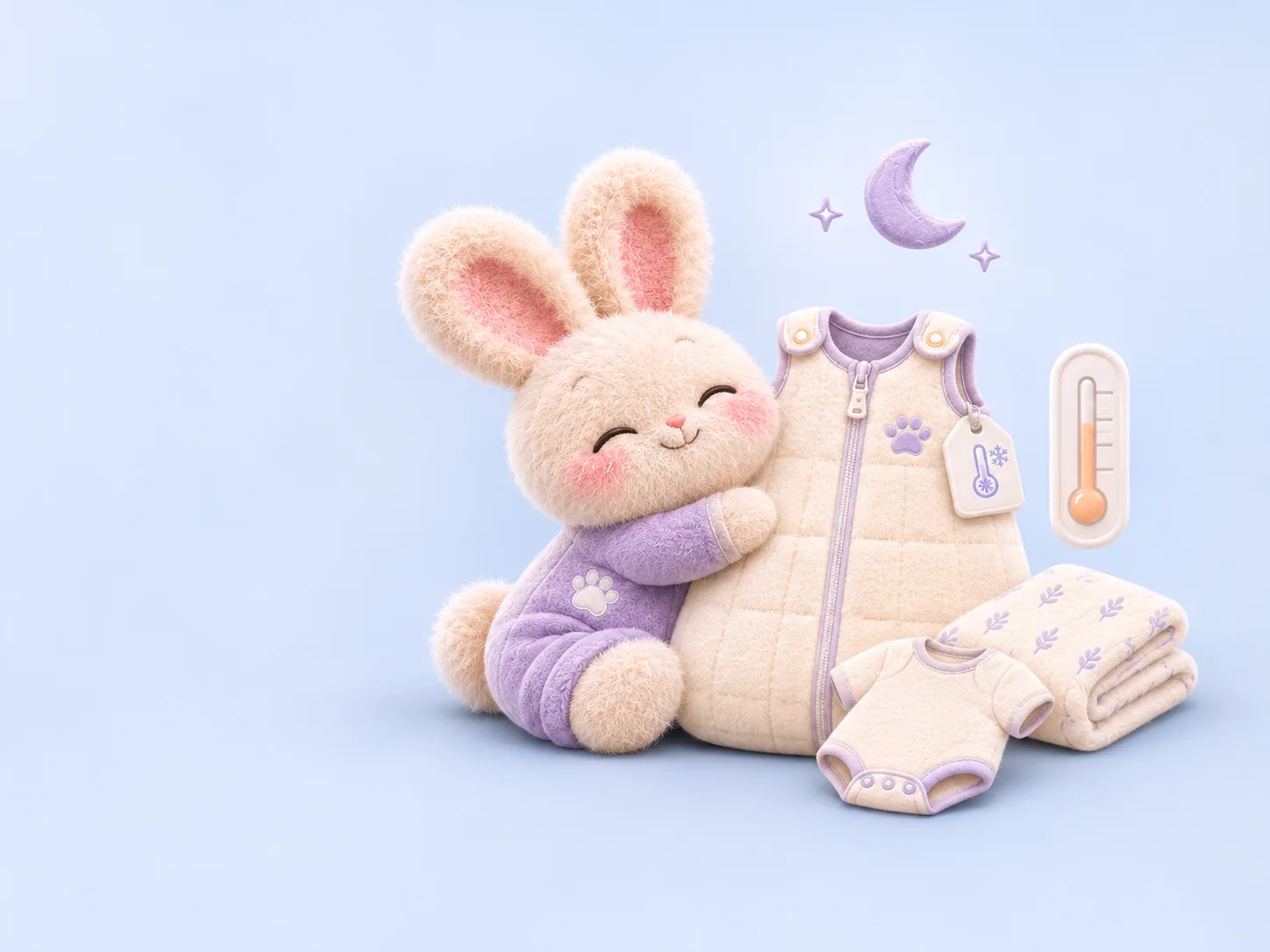
A simple rule from the NHS: your baby needs one more layer of clothing than you. Newborns are not yet good at keeping themselves warm, but they also overheat quickly, so several thin layers are better than one thick item. Then one layer is easy to take off when it gets warm.
What to put on for going home in frost:
- A bodysuit with long sleeves, in cotton.
- A warm sleepsuit with closed feet, such as our brushed-fleece Winter Sleepsuit. We explain which size to choose in our article on sizes.
- A hat. Needed outdoors; take it off indoors and in a warm car.
- A bunting bag on top, and in hard frost a blanket over the bunting bag while you walk to the car.
Check warmth on the chest or the back of the neck, not on the hands: babies' hands and feet are cooler, and that is normal. If the chest is hot or damp, one layer is too many.
Car seat: the bunting bag goes over the straps, not under them
This is the most important part of the article, because many parents do not know it. The American Academy of Pediatrics (AAP) says plainly: bulky clothing, including winter coats and snowsuits, should not be worn under the car seat harness.
The reason is physics. In a crash, fluffy padding flattens instantly and leaves slack under the straps. A child can slip out of straps that seemed tight. A padded bunting bag behaves just like a puffer coat.
How to do it right:
- Unzip the bunting bag and put your baby in the infant car seat in a sleepsuit and hat.
- Buckle and tighten the straps. The AAP's check: try to pinch a fold of the strap at the shoulder. If you can, tighten the straps.
- Cover on top with the bunting bag or a blanket, over the buckled straps.
- Face uncovered. Nothing bulky goes under your baby's back or between the body and the straps.
The AAP also warns about padded car seat covers and inserts: just because a product is sold in a store does not mean it is safe in a car seat. If an insert did not come with the car seat, a blanket on top is the better choice.
What Ukraine's traffic rules say
Since March 2021, Ukraine has had new rules on transporting children (Cabinet of Ministers Resolution No. 152). What matters for going home:
- A child shorter than 145 cm may only travel in a child restraint system secured with the car's seat belts. You may not hold your newborn in your arms, even for a short ride.
- Taxis are no exception. Only buses on passenger routes and special vehicles, such as ambulances, are exempt. When you book a taxi from the maternity hospital, ask for a car with an infant car seat or bring your own.
- Front seat only rear-facing. A child under three may ride in the front row only in a rear-facing car seat, and the front airbag for that seat must be switched off.
- A car seat that fits your child's weight and height, installed according to the instructions of the car seat and car manufacturers.
Newborns ride in an infant car seat facing the rear. Install it in advance and practice the fastening at home, not in the maternity hospital parking lot: in the cold and in a hurry, everything takes longer.
How not to overheat your baby in the car and at home
Overheating in winter happens more often than it seems: a baby is dressed for the frost and then rides for half an hour in a car with the heater on. The NHS advises taking off the hat and extra clothing as soon as you come indoors or get into a warm car, bus or train, even if it means waking your baby.
What helps:
- Warm up the car before you leave the maternity hospital, so you can take off the top layer right away.
- The top layer should come off easily. That is exactly why the AAP advises a blanket or bunting bag over the straps: you fold it back once the car is warm.
- At home, take off the bunting bag, blanket and warm hat right away. Your baby should not sleep in a bunting bag or a hat; a sleeping bag is for sleep.
Signs of overheating: sweaty skin, damp hair, flushed cheeks, rapid breathing. We explain how to dress your baby for sleep at home in our article on TOG and our article on safe sleep.
How to choose a going-home bunting bag
- Unzips all the way. A full-length zip or a convertible blanket: that way the bunting bag becomes a blanket in the car and at home.
- Room for the legs. Inside, your baby should be able to bend and spread the legs, as in a loose pouch. We explain why this matters for the hips in our article on swaddle pods.
- The hood does not slip over the face, and the bow and lace do not end up near the mouth.
- Warmth from layers, not thickness. A transitional bunting bag with a warm sleepsuit underneath is more flexible than a very thick winter one: you can always take one layer off.
- Washes at 30 °C. After going home, the bunting bag will still be used in the stroller, so washing should be easy.
If you want everything in one go, our Little Bunny Going-Home Set has six items, blanket included.
The bunting bag after going home
After going home, the bunting bag becomes a stroller blanket for winter walks. The rules are the same: face uncovered, warmth checked on the chest, and the top layer off as soon as you are home.
The bunting bag lasts as long as your baby fits in it comfortably and can move the legs. After that, walks move on to a snowsuit, and for your hands on the stroller there is a hand muff.
Checklist for going home in winter
- The infant car seat is installed rear-facing and checked in advance
- The car is warmed up before you leave the hospital
- Your baby is in a bodysuit, a warm sleepsuit and a hat
- The bunting bag unzips all the way, and there is a blanket for a frosty day
- In the car seat the straps are tight, and you cannot pinch a fold at the shoulder
- The bunting bag or blanket is over the straps, the face is uncovered
- In the warm car and at home, the top layer and hat are off
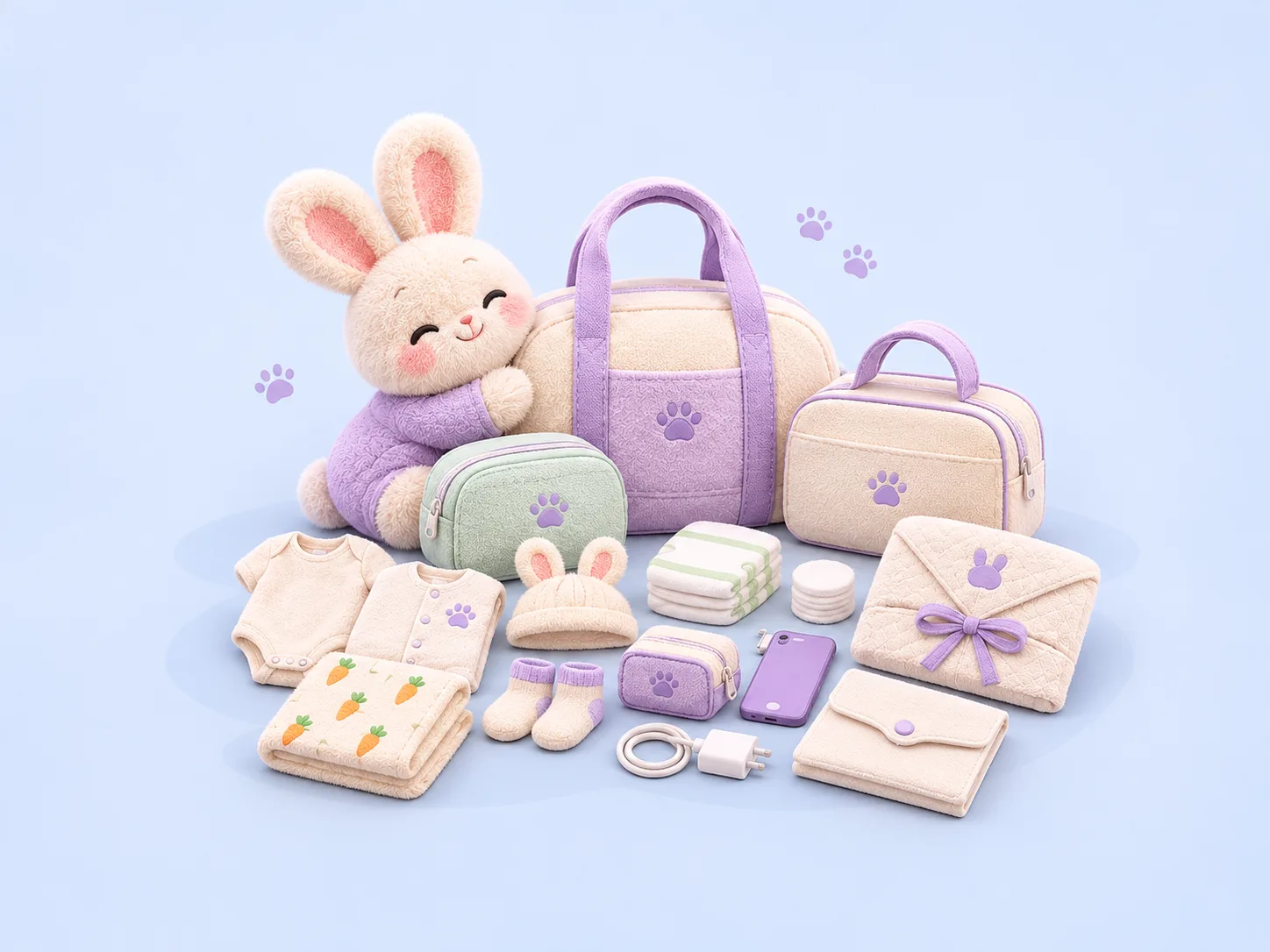
We list what else to pack for going home in our article on the hospital bag.
This article explains general recommendations and does not replace advice from your pediatrician. If your baby was born early or with a low birth weight, ask your doctor before discharge how to dress and transport your baby.
Questions and answers
Can my baby ride in the car seat in a bunting bag?
Only if the bunting bag is thin and does not get in the way of tightening the straps snugly. A puffy padded bunting bag compresses under the straps in a crash, so buckle your baby in a sleepsuit and lay the bunting bag on top.
Should I choose a transitional or a winter bunting bag?
A transitional bunting bag with a warm sleepsuit underneath is more practical: in the car and at home, the extra layer comes off easily. A very thick winter bunting bag is good for a long walk, but in a warm car your baby quickly overheats in it.
Does my baby need a hat if the bunting bag has a hood?
Outdoors, yes, thin or warm depending on the weather. In a warm car and at home, take the hat off, even if your baby is asleep.
Can I hold my newborn in my arms in a taxi?
No. Under Ukraine's traffic rules, a child shorter than 145 cm may only travel in a child restraint system, and taxis are not exempt. Book a car with an infant car seat or bring your own.
How many layers does my baby need for going home in winter?
One more than you are wearing. Usually that is a bodysuit, a warm sleepsuit and a hat, with a bunting bag on top. In hard frost, add a blanket over the bunting bag while you walk to the car.