How to choose bed linen: sateen, percale, bamboo, Tencel or twill
Bed linen is chosen with the eyes: the colour, the print, a nice photo. But how you sleep in it depends on the fabric. Here is how sateen, percale, twill, bamboo and Tencel differ, what the numbers on the label mean and what bedding to give a child.

Contents 10 sections
If you sleep hot, take percale, bamboo or Tencel: they feel cool. If you get cold, choose twill: it is dense and warm. Sateen is smooth and soft and suits the whole year, and washed sateen does not even need ironing. Thread count (TC) shows how dense the fabric is: 300 is already good, 400 is softer, but the thread and the weave matter too. Pick the set by the size of your duvet and mattress. A baby under one needs only a fitted sheet in the cot; a duvet and pillow come after their first birthday.
What to look at besides colour
- Fibre. Cotton, bamboo, Tencel. Natural fibres breathe and absorb moisture, so you do not sweat under them.
- Weave. The same cotton can make smooth sateen, matte percale or dense twill. The weave decides how the bedding feels and whether it keeps you warm.
- The numbers on the label. Thread count (TC), thread thickness, and for twill also density in g/m².
- Details. A pillowcase flap so the pillow does not slip out, a duvet cover with snaps, a flat or fitted sheet.
Fabrics: how they differ
- Sateen. Cotton, smooth, with a soft sheen. Neither cool nor too warm, so sateen bedding is used all year round. Luxury sateen is dense and stands up to many washes; it is sewn for hotels too.
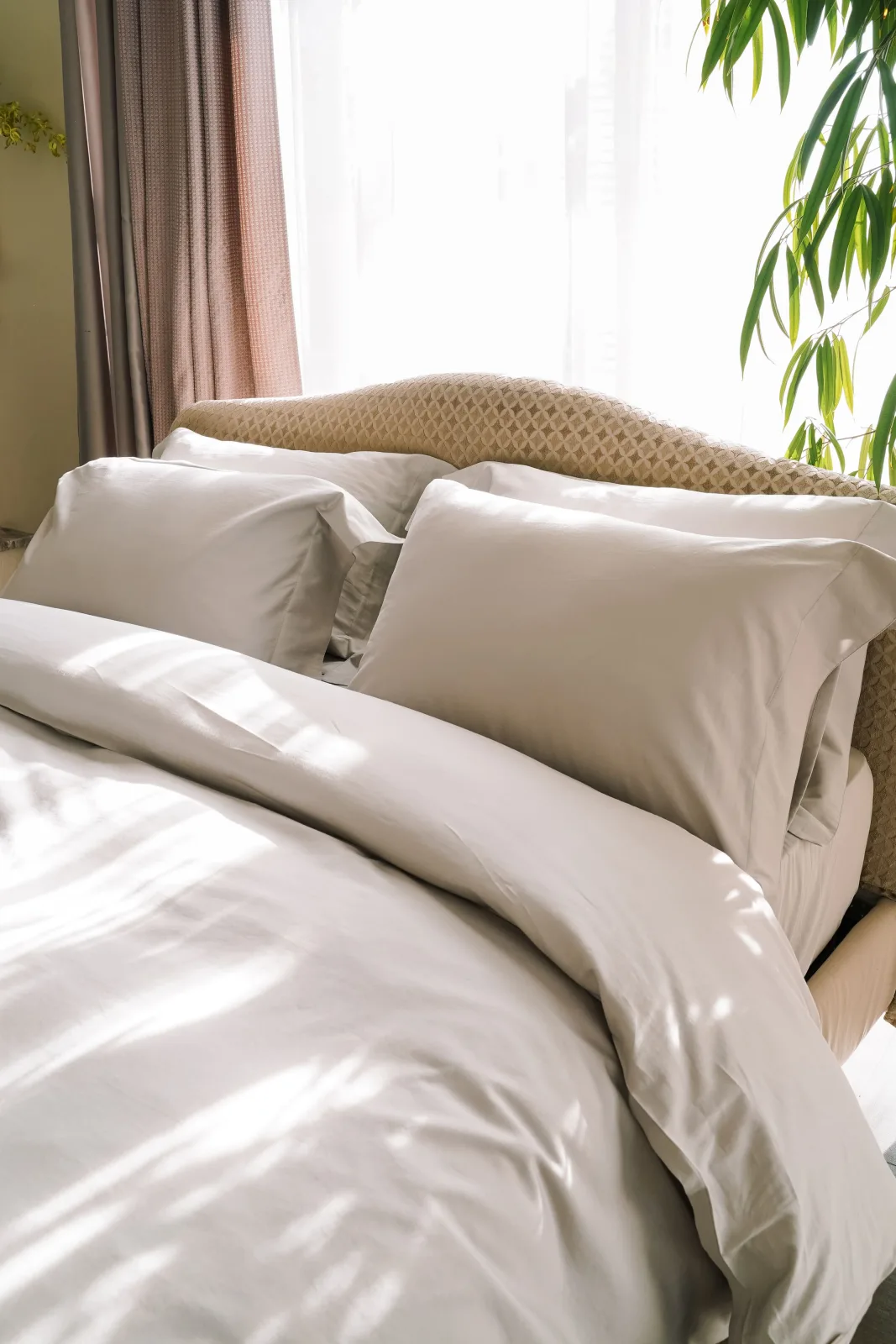
- Washed sateen. Sateen after a special finish: matte, very soft and a little crumpled. No ironing needed, it is meant to look slightly rumpled.
- Percale. Tightly woven cotton: matte, light, slightly crisp and cool. For those who sleep hot, and for summer.
- Twill. Cotton with a diagonal weave: dense, soft, slightly velvety. The warmest of the bedding fabrics, for autumn and winter.
- Bamboo. Smooth, with a light sheen, cooler than cotton. Often chosen by those who sleep hot, pregnant women included.
- Tencel. A fibre made from eucalyptus cellulose: silky, light and cool to the touch.
- Jacquard and stripe sateen. The pattern is not printed: the weave itself makes it. There is nothing to wash out.
What TC300, TC400 and 60×60 thread mean
TC, or thread count, shows how many threads there are in a square inch of fabric, roughly a 2,5 by 2,5 cm square. TC300 bedding is already dense and pleasant, TC400 is softer and smoother still.
The numbers 60×60 or 80×80 tell you the thread thickness: the bigger the number, the finer the thread. Fine 80×80 thread makes sateen especially dense and soft.
Do not chase the biggest number. Fabric with 300 fine quality threads will be better than one where a big number comes from thick or twisted thread. Look at all the numbers together and at how the fabric feels in your hands.
For twill, density in grams per square metre is often given instead of TC: the more grams, the denser and warmer the fabric.
How to choose bedding that suits you
- You sleep hot. Percale, bamboo or Tencel. During pregnancy and breastfeeding mums often feel hot at night, so cool bedding really helps.
- You get cold. Twill: it is dense and noticeably warmer than smooth fabrics.
- You hate ironing. Washed sateen or jacquard.
- You want one set for the whole year. Sateen.
- The bedding is washed every week and has to last for years. Dense luxury sateen, stripe sateen or percale.
- Sensitive skin. 100% cotton or bamboo with no print: a smooth fabric rubs less, and white bedding has no dye.
How to choose the set size
Sets are named with words: single, double, euro, family, king and super king. But duvet cover and sheet sizes differ between makers, so compare centimetres, not names. Bedding sizes are chosen by your own duvet and mattress.
- A flat sheet should tuck under the mattress on every side. A fitted sheet is taken to the exact size of the mattress, allowing for its depth.
- A family set has two duvet covers: when each of you sleeps under your own duvet, nobody steals it.
On the pages of our adult sets there is a table with the exact sizes of the duvet cover, sheet and pillowcases.
What bedding a child needs
Under one. A firm mattress and a fitted sheet are all the cot needs. The NHS advises against pillows, duvets, cot bumpers and soft toys for a baby. To keep the baby warm, put them in a sleeping bag. How to set up such a place is in our article on safe sleep for babies.
After one. The child moves on to a duvet and pillow, and then a children's set is needed. How to choose a first duvet, we covered separately: how to choose a duvet.
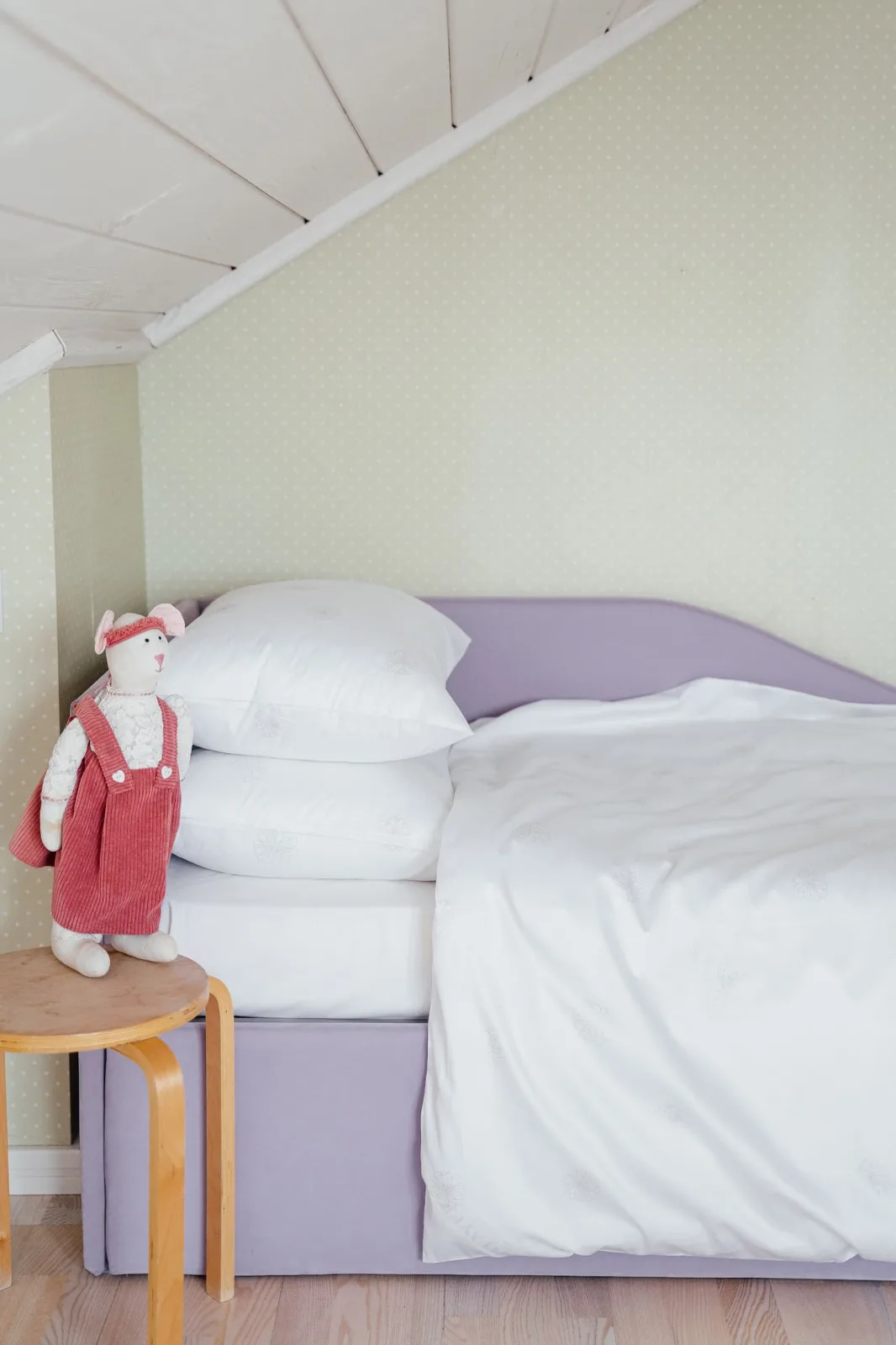
Cotton sateen suits children's bedding well: it is smooth, soft and stands up to frequent washing. Many children like bedding “just like mum and dad's”, without bright cartoon characters.
Our bed linen
All our bed linen is sewn by the Kharkiv factory SHTAYER. Each size button shows its price.
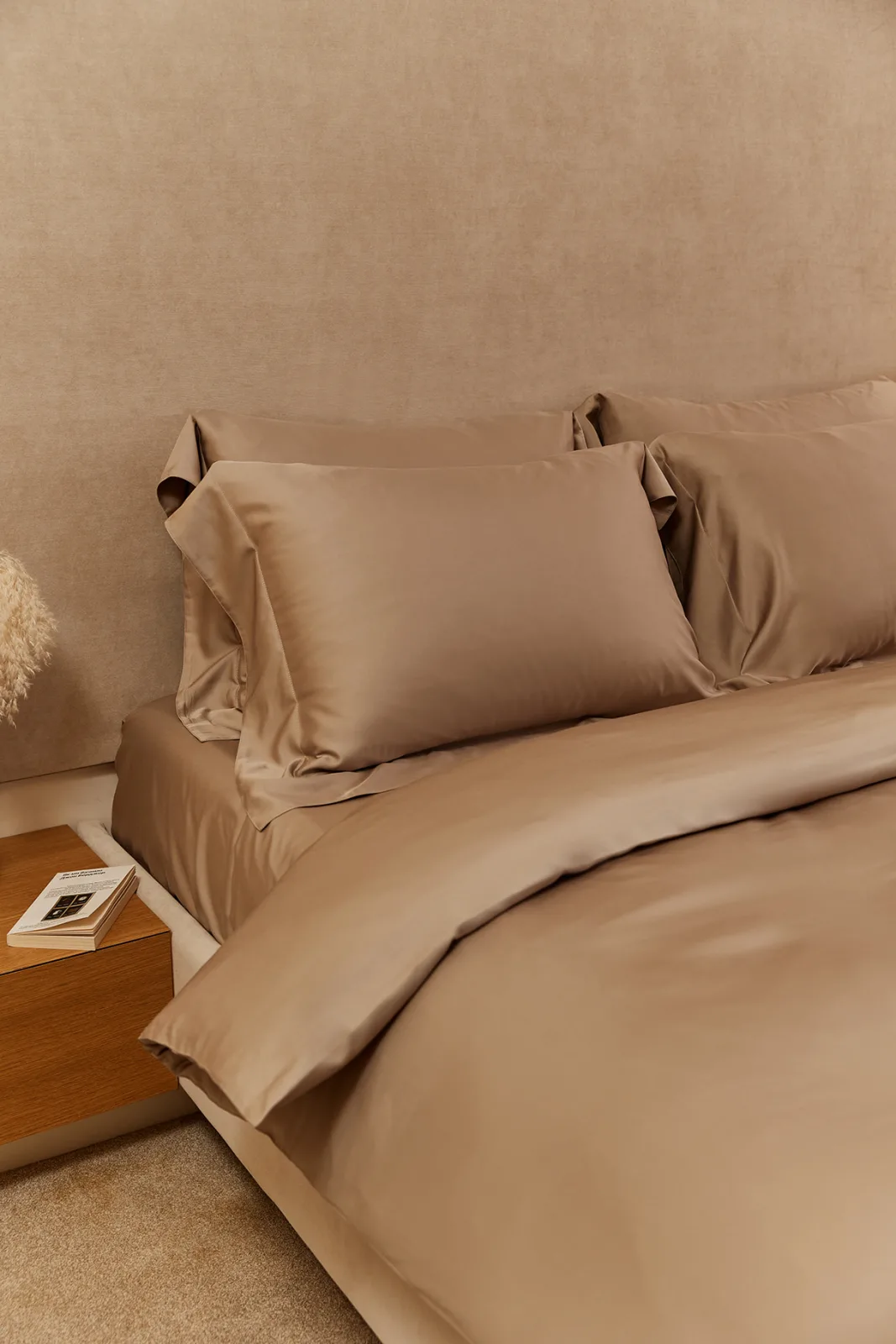
- BAMBOO. Bamboo fabric, 300 threads, six calm colours. For those who sleep hot.
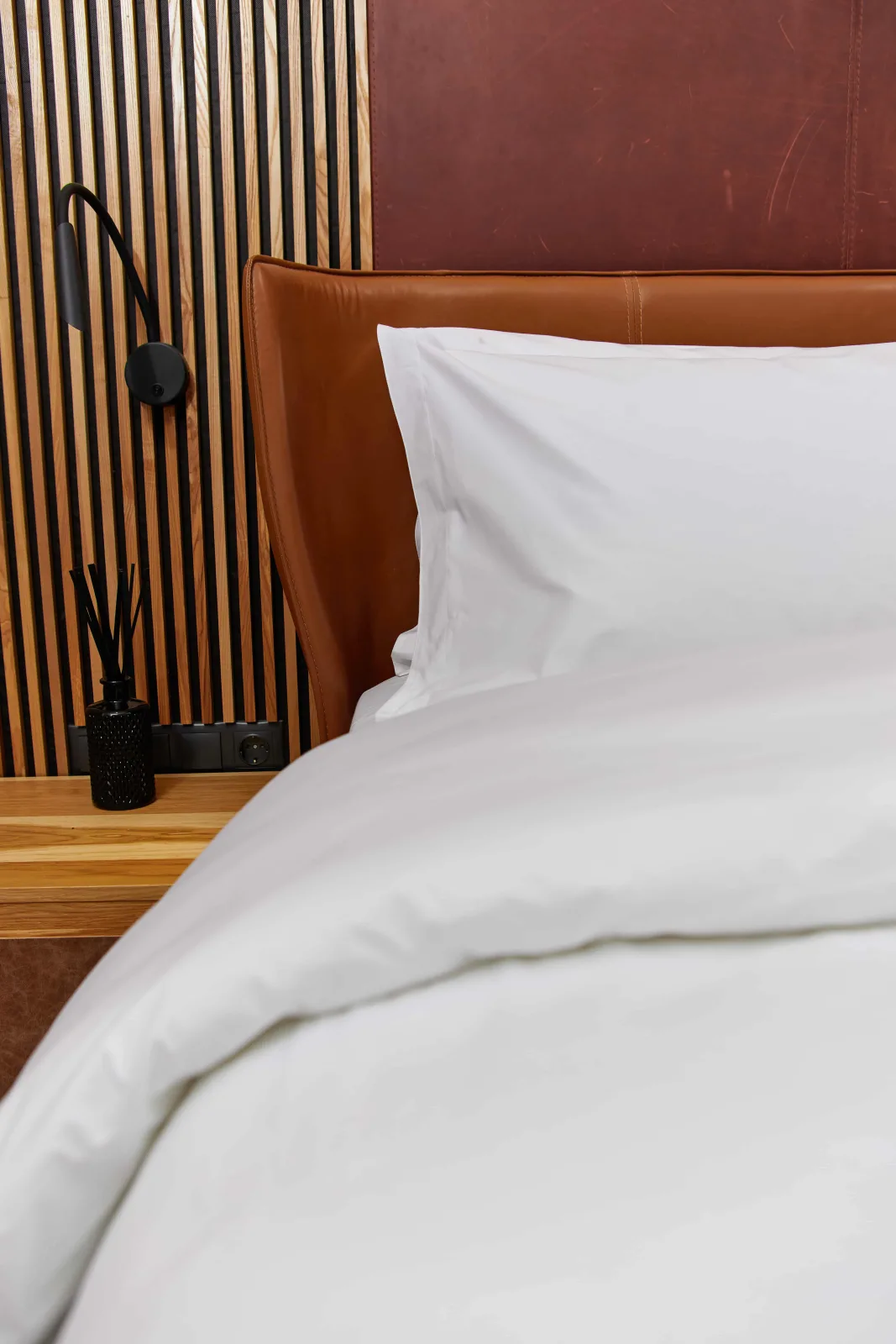
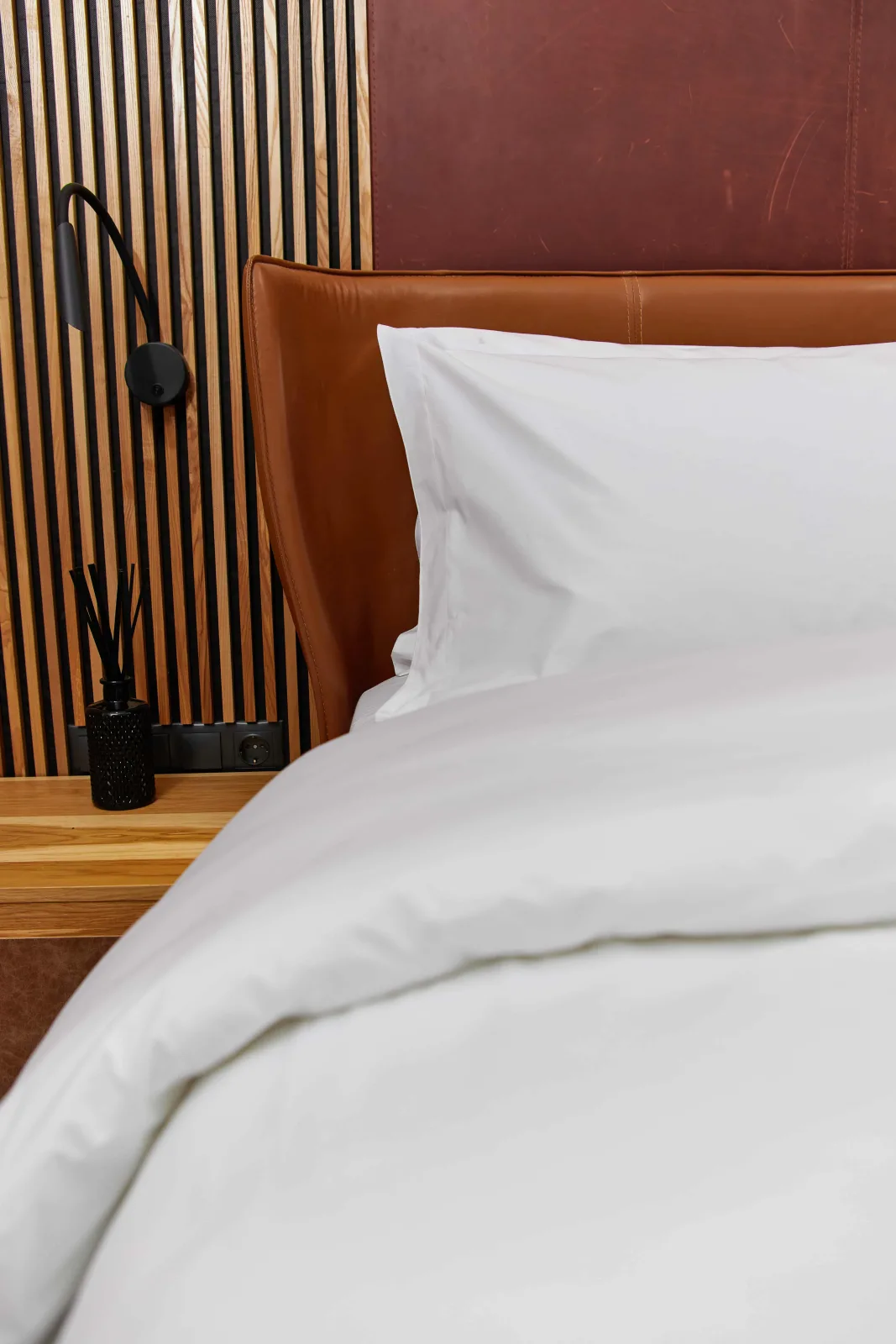
- DURABLE. White percale, 300 threads, embroidery on the pillowcases. Matte, light and strong.
- SATIN PREMIUM. White TC400 sateen: smooth, soft, with a delicate sheen.
- Washed sateen. Light grey, matte, no ironing needed.
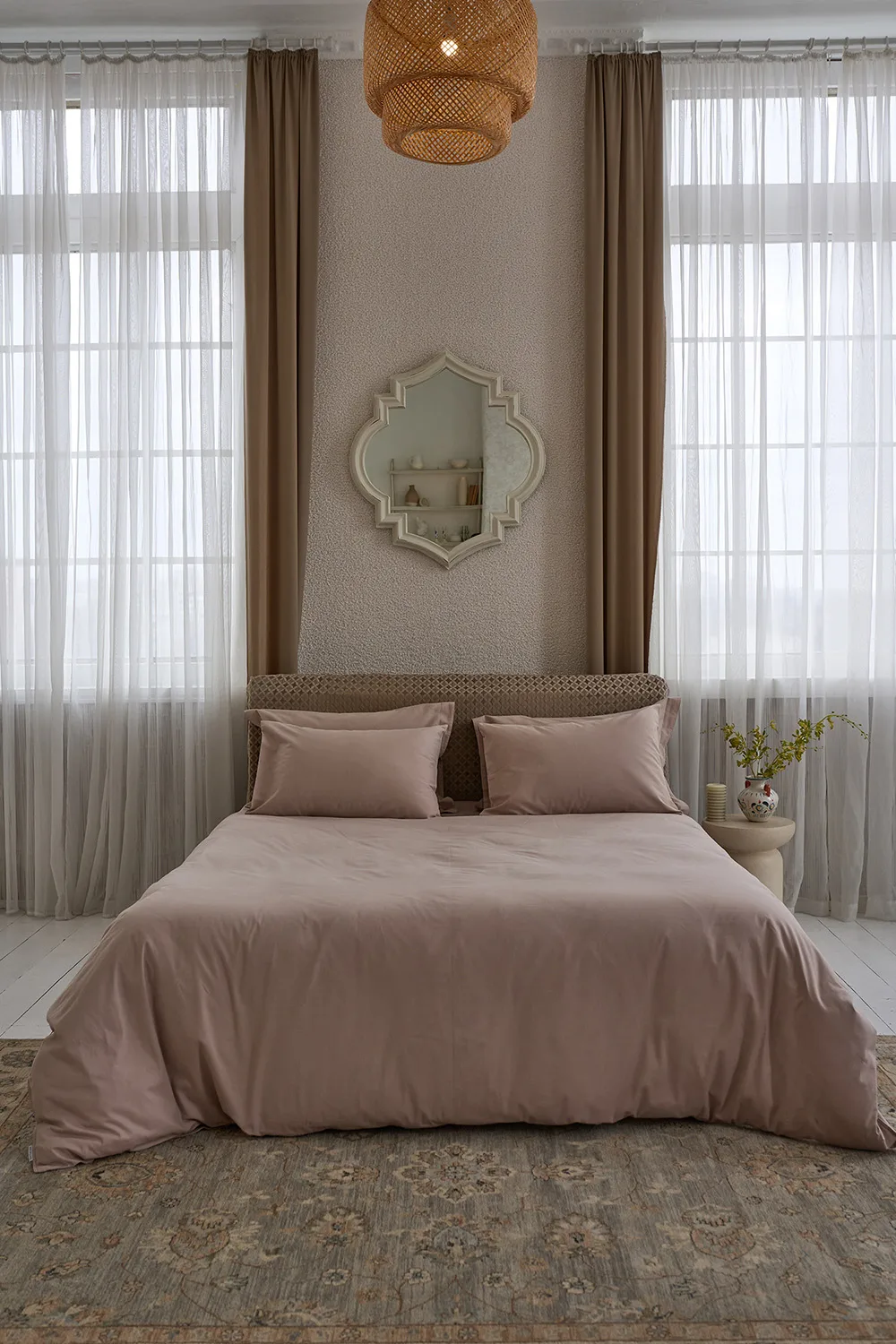
- Twill. 190 g/m², powder, olive and graphite. The warmest bedding for winter.
- GENTLE. Tencel with watercolour flowers on white.
- WHITE KID. A children's set in white sateen with embroidery, for a child from one year.
All sets are in the Bed linen section.
How to care for bedding so it lasts longer
- Wash the bedding before first use: it makes the fabric softer.
- Turn the duvet cover and pillowcases inside out before washing, and close the snaps and flaps.
- Do not overload the drum: the bedding needs to move freely, then it rinses better and creases less.
- SHTAYER recommends a delicate wash at up to 40 °C for all its bedding, a spin of up to 800 rpm and detergents without chlorine. If it needs whitening, use only an oxygen bleach.
- Wash bedding separately from clothes and towels, and dry it in the shade so the colour and print do not fade.
- It helps to have two sets per bed: one on the bed, one in the wash.
Questions and answers
Which fabric is best for bed linen?
There is no single best one. Sateen suits the whole year, percale, bamboo and Tencel are cool for those who sleep hot, and twill is warm for winter.
Sateen or percale?
Sateen is smooth, with a soft sheen, and neutral in temperature. Percale is matte, a little crisp and cooler. If you sleep hot, take percale.
What do TC300 and TC400 mean?
How many threads there are in a square inch of fabric. TC300 bedding is already dense and pleasant, TC400 is softer and smoother still.
Is a higher thread count always better?
Not always. Thread thickness and weave matter too: fabric with 300 fine quality threads can be better than one where the number was inflated with thick thread.
Which bedding does not crease?
Washed sateen and jacquard: the first is meant to look a little crumpled, and on the second the pattern hides creases.
Which bedding is the warmest?
Twill. It has a diagonal weave, so the fabric is dense, slightly velvety and noticeably warmer than smooth fabrics.
Which bedding should I choose if I sleep hot?
Percale, bamboo or Tencel. They feel cool and let air through well.
How is a single set different from a euro set?
In the size of the duvet cover and sheet: a single set is for a single bed, a euro set for a wide double. Compare the centimetres in the table, not the name.
Does a baby under one need bed linen?
Only a fitted sheet on a firm mattress. A pillow and duvet do not go into the cot of a baby under one.
From what age does a child need a bedding set?
When the child moves on to a duvet and pillow, usually after their first birthday.
How often should bed linen be changed?
Usually once a week. A child's bedding, and any bedding when someone is ill or it is hot, more often.