How to choose a duvet: down, wool, silk or synthetic
You buy a duvet for years, and we spend a third of our lives under it. We go through the fillings without the marketing words, explain how to choose the warmth and size, what to do when someone in the family has allergies, and which duvet to get a child who has outgrown the sleeping bag.
Contents 10 sections
A down duvet gives the most warmth for the least weight, but it goes to professional cleaning. Wool is warm too and lets moisture out well, silk and bamboo give light, moderate warmth, and synthetics are the most practical: you wash them at home at up to 40 °C. Choose the warmth by the season and by how warm your bedroom is, and the size by the width of the bed. A baby under one needs no duvet: they sleep in a sleeping bag, and a light 110×140 cm children's duvet comes after the first birthday.
Checklist "Choosing a duvet"
One A4 sheet with tick boxes: print it or save it on your phone and check off what is ready.
Fillings: how they differ
The filling decides how warm the duvet is, how much it weighs, how it breathes and how you care for it. Here are the main ones.
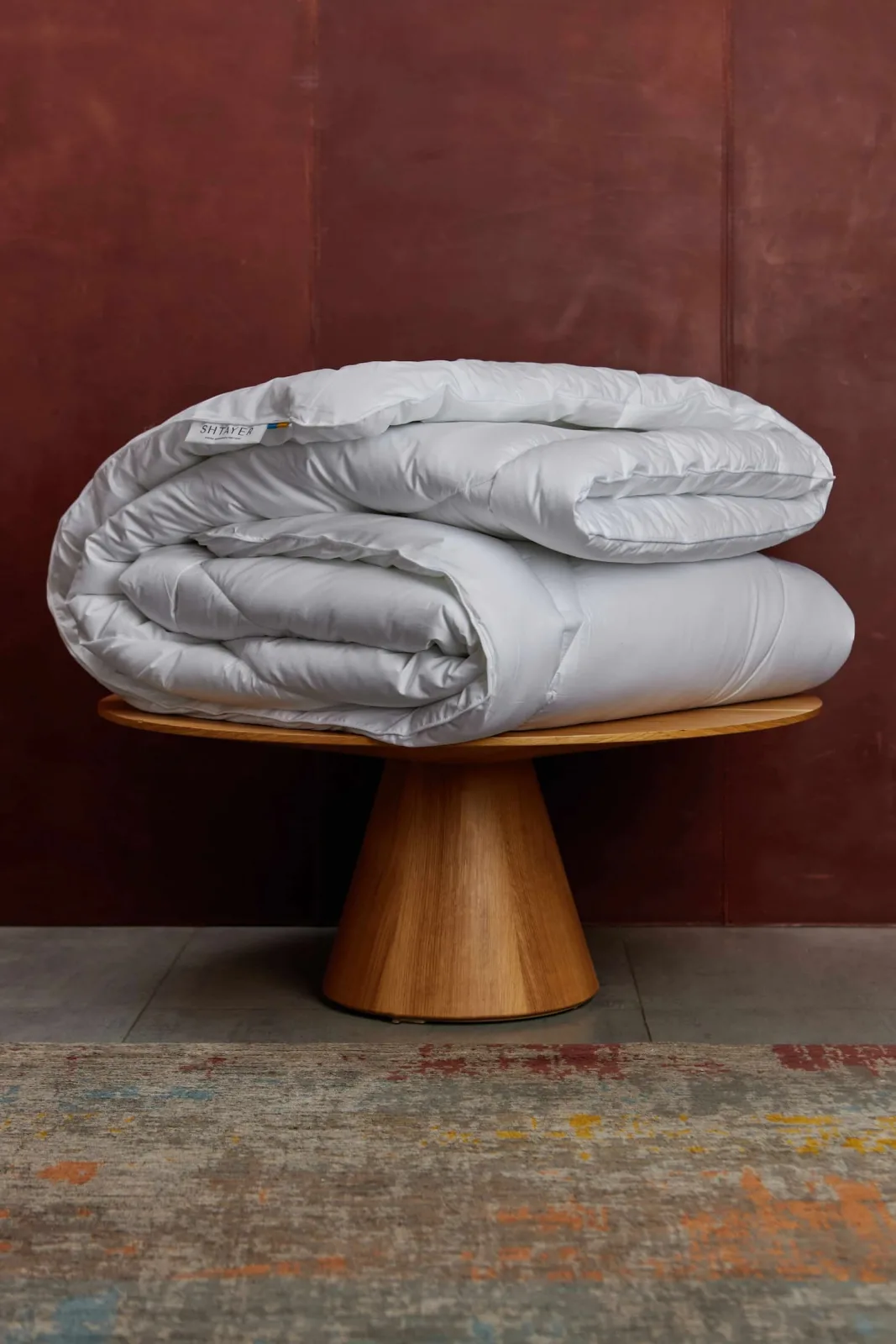
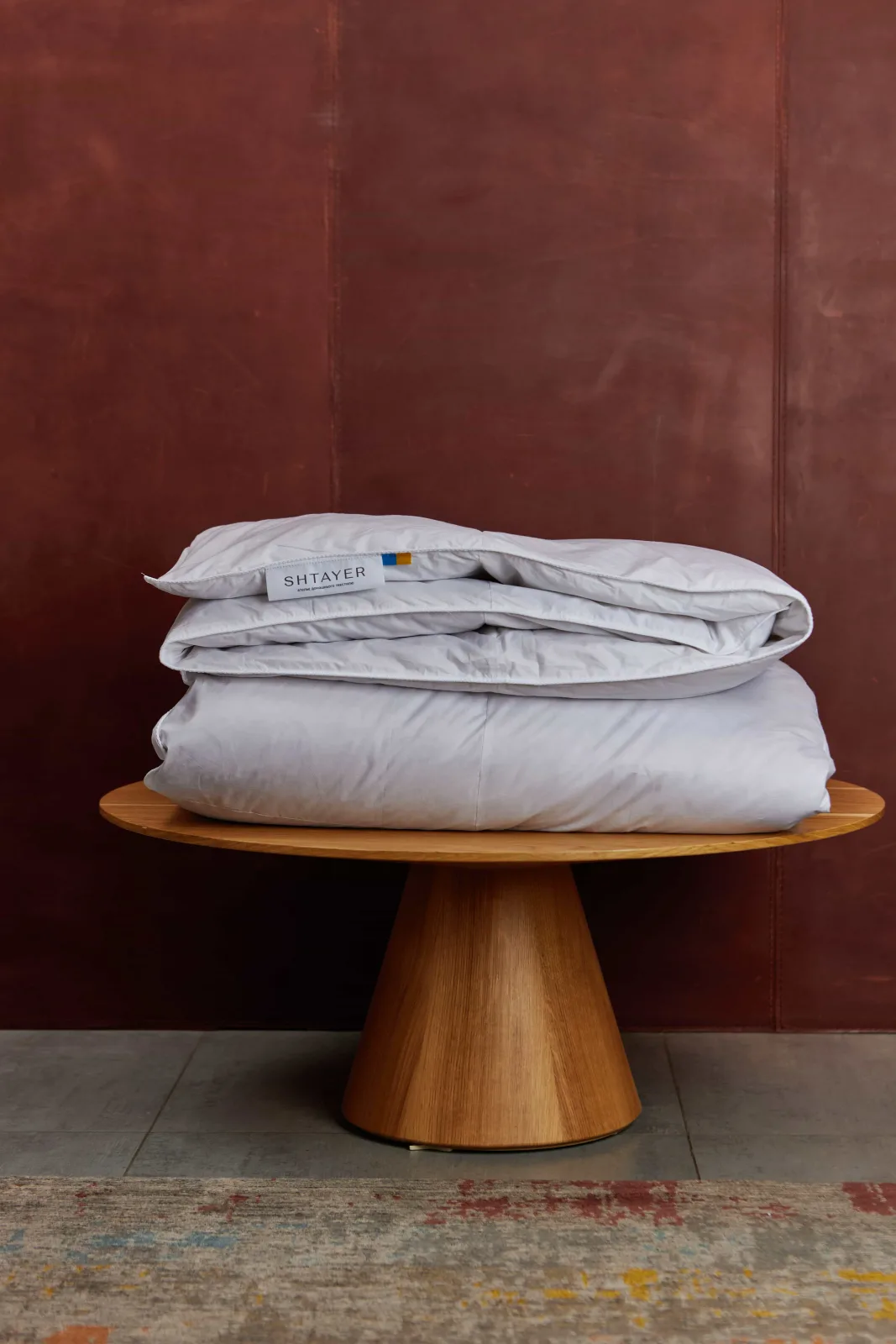
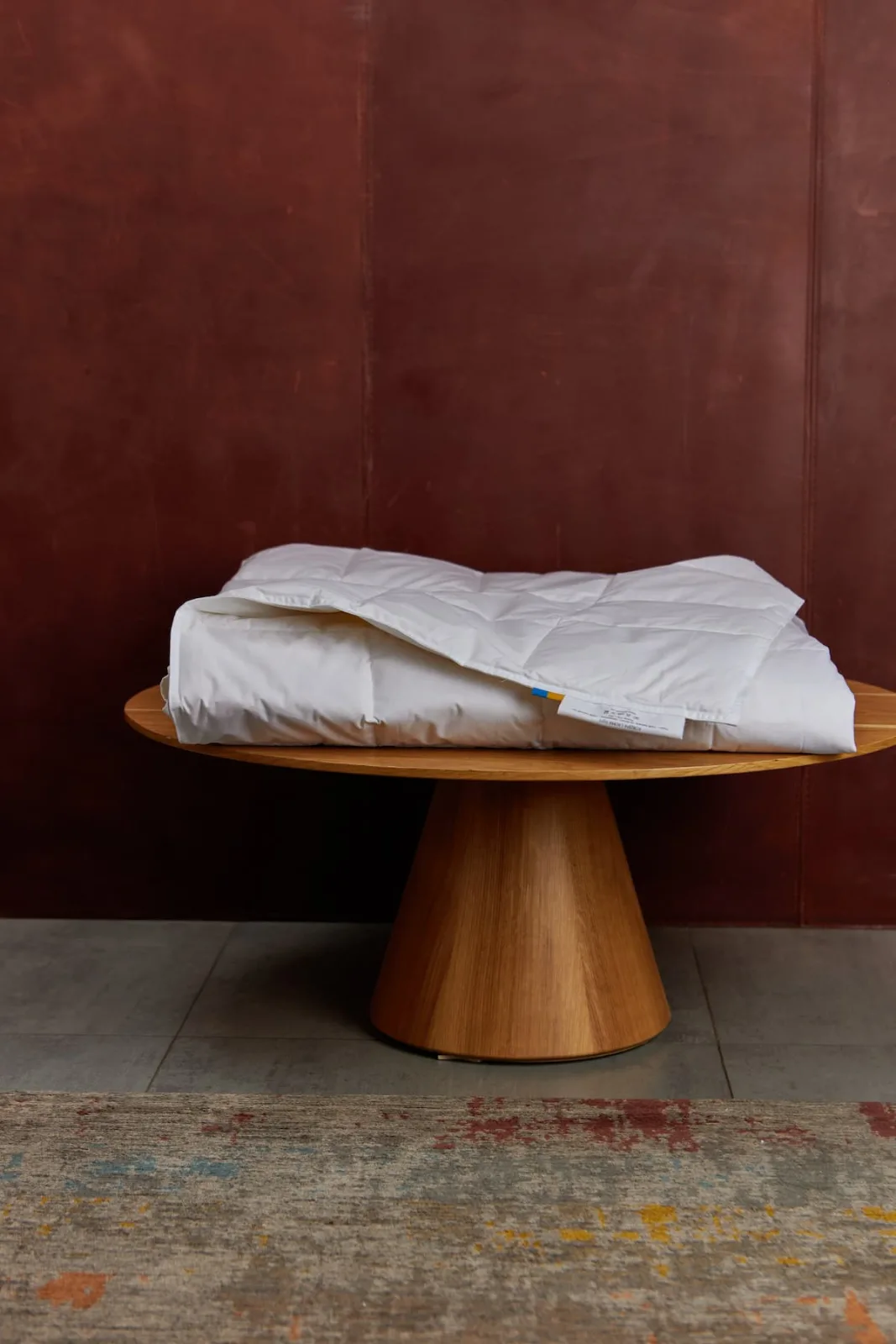
- Goose down. The most warmth for the least weight. Down absorbs and releases moisture well, does not build up static and easily regains its loft when you shake the duvet. The downsides are price and care: down is hard to dry fully at home, so down duvets go to professional cleaning. Example: LAUMA with grey goose down.
- Down and feather. A mix of down and feathers, cheaper than pure down. The more feathers, the heavier and flatter the duvet, and the label gives the proportion in numbers.
- Wool: camel, sheep's, cashmere. It holds warmth and lets moisture out at the same time, so you sweat less under a wool duvet. Camel wool is light, and cashmere warms even in a thin layer. Wool is not washed at home either. Examples: CAMEL and CASHMERE.
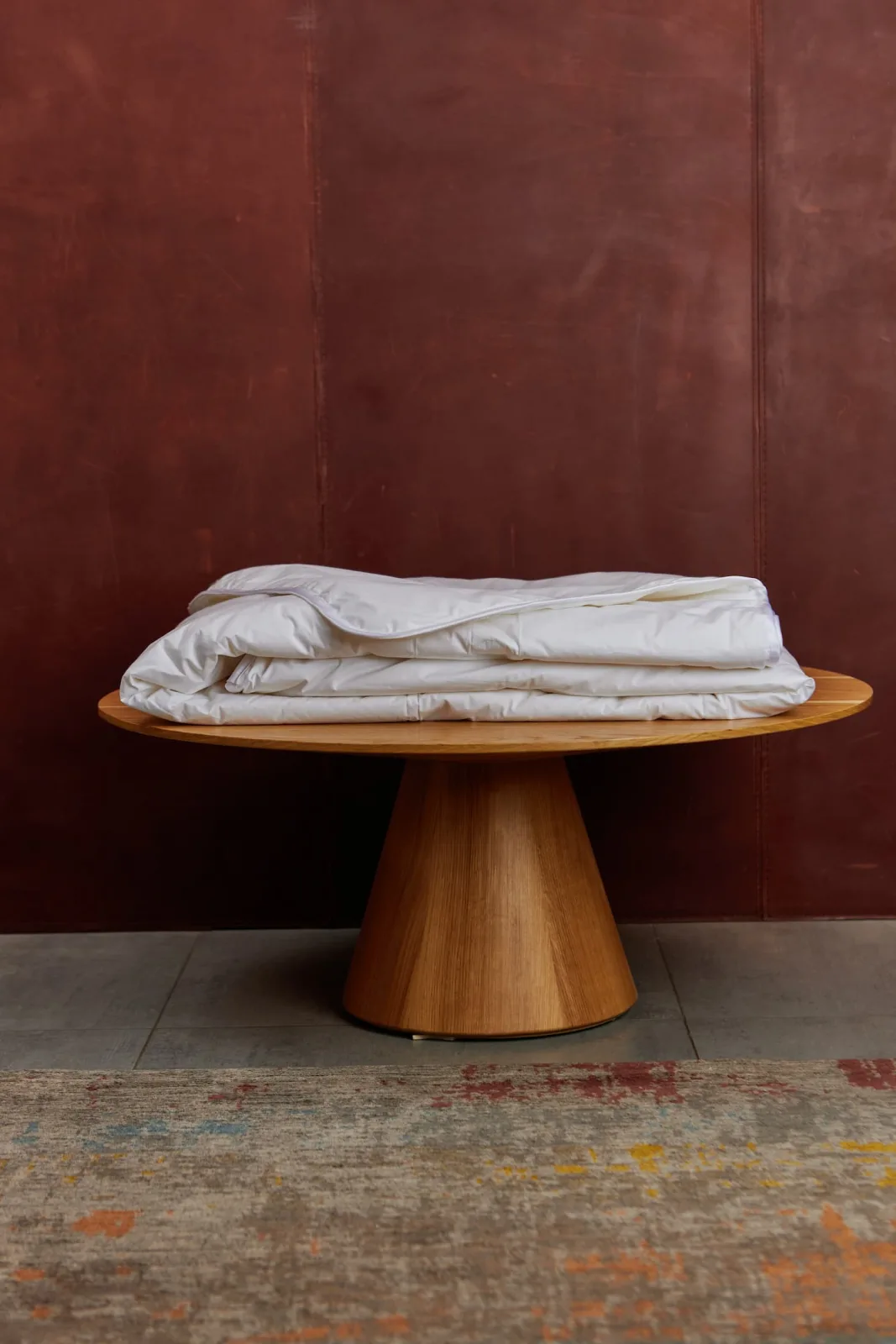
- Silk. Light and supple, it drapes softly over the body. A silk duvet is not too hot in summer and warm in winter, so it is often chosen as an all-season one, children's included. Silk does not like water or rubbing, so professional cleaning only. Example: the children's KID SILK.
- Bamboo viscose. Gives moderate, soft warmth. Good for a warm bedroom and for those who hate overheating at night. Example: BAMBOO.
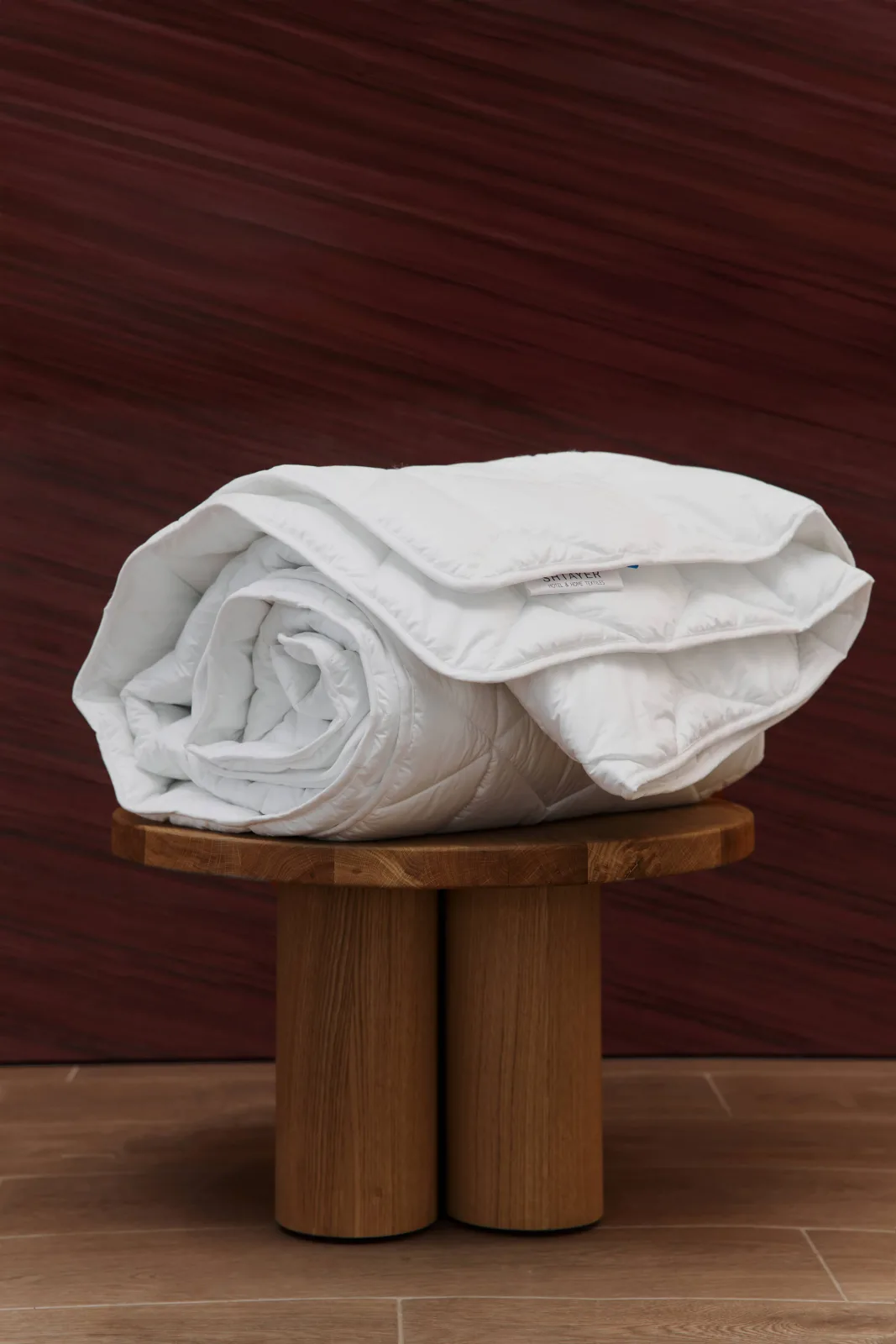
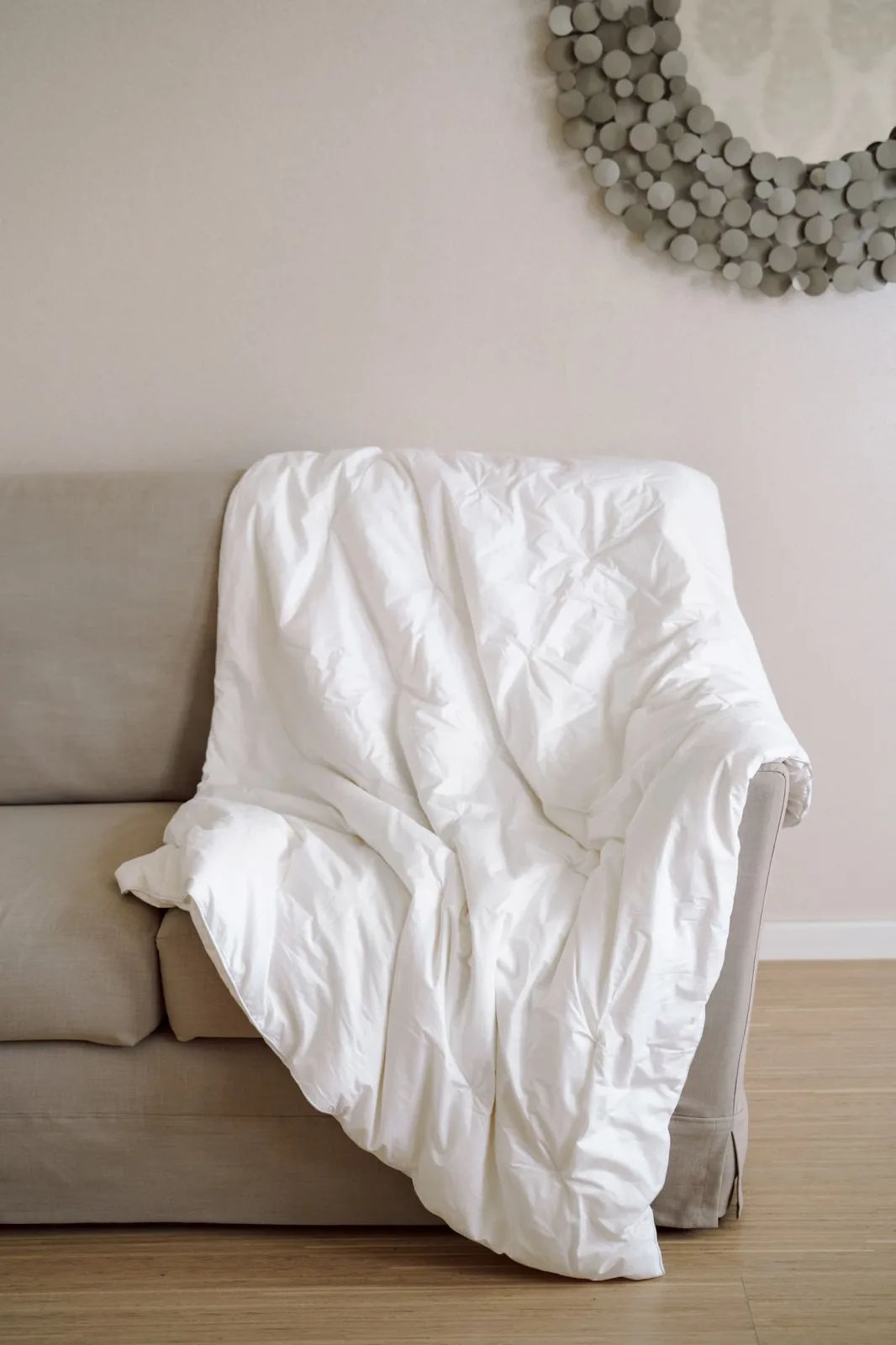
- Synthetics: faux down, microfibre, hollow fibre. Polyester fibres that imitate down. A synthetic duvet costs less, does not hold smells and, above all, can go in the washing machine at home, usually at up to 40 °C. Modern synthetics are light and warm, though for the same weight they are a little less warm than down. Examples: AERY, SENSORY, INPRIMA.
An expensive natural filling is not better in itself. If a two-year-old has breakfast in your bed every morning, a duvet you can throw in the washing machine is more practical than a down one you have to take to the cleaner's every time.
How much warmth you need
Ukrainian makers write the season on a duvet: summer, spring-autumn, autumn-winter or all-season. In Britain warmth is shown as a TOG number, the same one used on baby sleeping bags. Shops there give roughly these ranges:
- 1-4,5 TOG: a light summer duvet;
- 7,5-10,5 TOG: spring and autumn;
- 12-15 TOG: winter.
TOG measures warmth, not thickness. A thin down duvet can be as warm as a thick synthetic one, so go by the season, not by the bulk.
When choosing, think about your bedroom, not just the time of year. In a flat where the heating runs high in winter, a winter duvet will feel stuffy, and an all-season or a thin down one like LAUMA LIGHT will do. If the radiators are barely warm and you often feel cold at night, take an autumn-winter duvet. And if you keep kicking the duvet off in your sleep, a lighter one is better than the warmest.
Or skip the choice: two duvets of different warmth that fasten together. That is how the FOUR SEASONS set works: a light duvet for summer, a standard one for the in-between seasons, and together they are the warmest, for frosty nights.
Duvet size and the duvet cover
A duvet should be clearly wider than the mattress, so that it hangs over the sides and does not slide off when you turn over. Go by the width of the bed:
| Bed | Duvet |
|---|---|
| single, 90-120 cm | 140×200 cm |
| double, 140-160 cm | 220×200 cm |
| wide, 180-200 cm | 240×220 or 260×240 cm |
If you share one duvet and someone always pulls it to their side, take a size up. A big duvet helps in the morning too, when your older little one runs in to snuggle up.
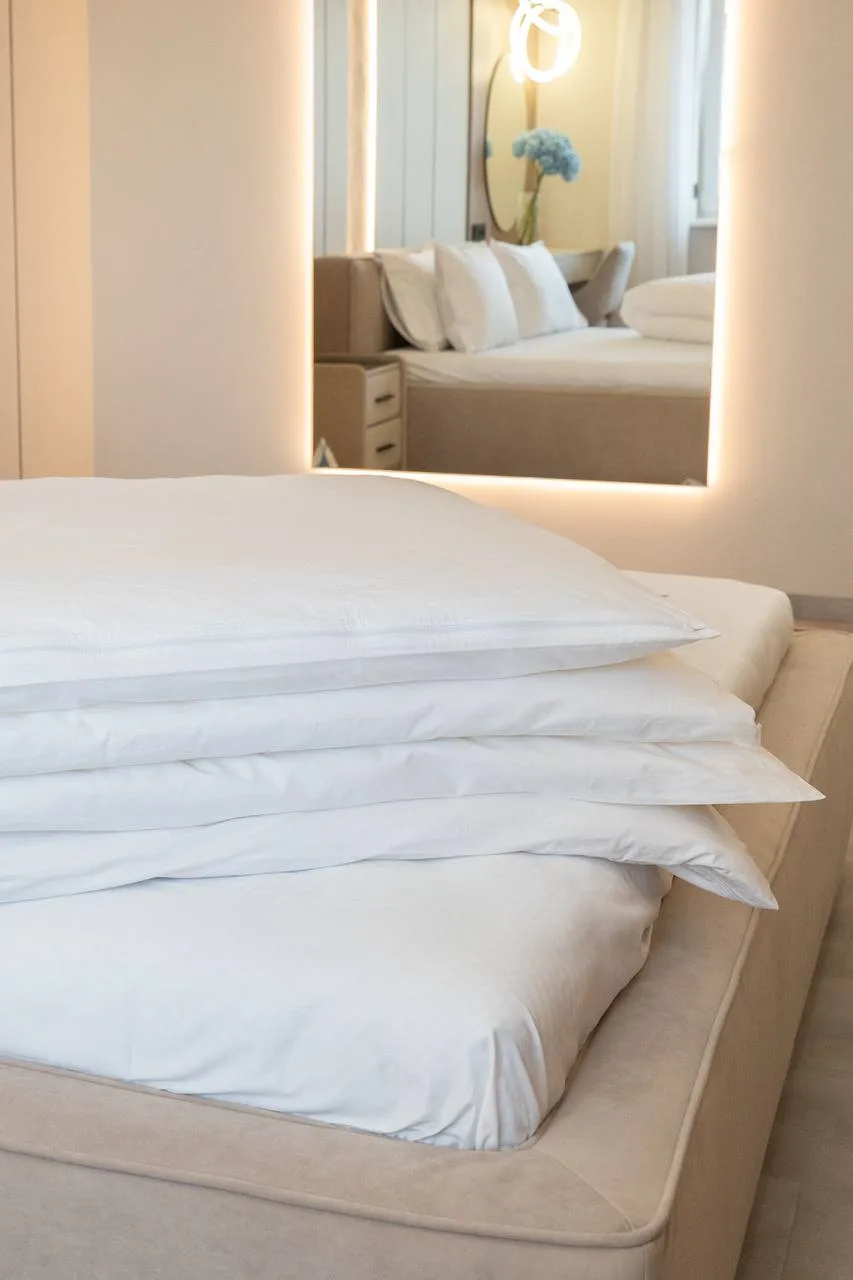
A duvet cover should match the duvet size exactly. In one that is too big the duvet bunches into a corner, and in one that is too small it gets squashed and warms less. How bed linen set sizes are named is explained in the glossary.
Cover and quilting
A duvet's shell should be dense, so that down or fine fibre does not work its way out, and still let air through. It is most often made of cotton:
- cotton ticking (tik-batiste): a dense, smooth fabric for down and synthetic duvets;
- mako batiste: thinner and smoother; in our range the wool duvets have shells made of it;
- sateen and sateen jacquard: soft, with a slight sheen.
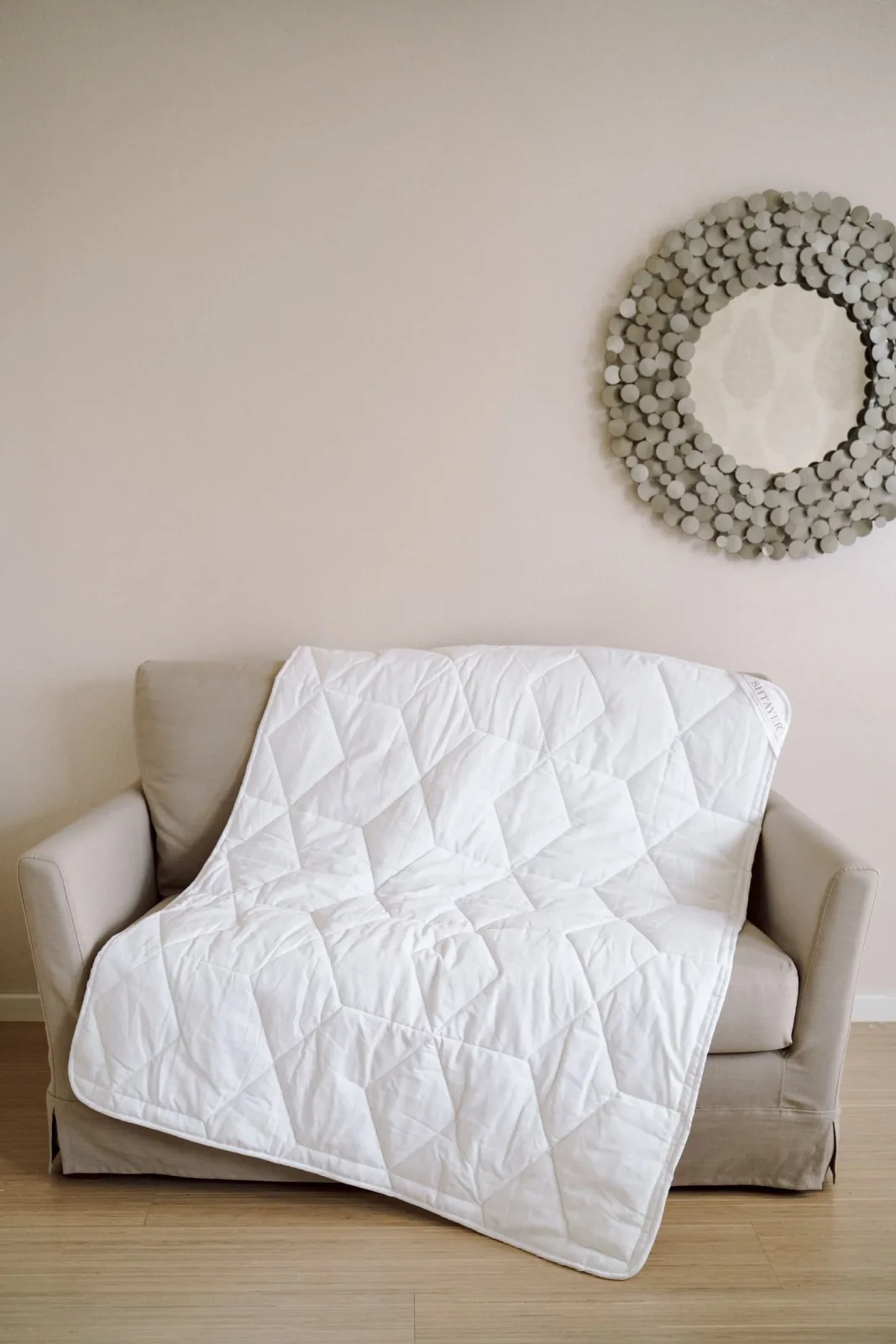
Check how the duvet is stitched, too. A box-stitched duvet is divided into sections with the same amount of filling in each, so it does not drift to one edge. Down duvets are made this way. Synthetic ones are more often stitched straight through, which is quilting: the filling stays even after many washes.
If someone in the family has allergies
The word "hypoallergenic" on a label only means that the material rarely causes allergies. It is not a guarantee and not a medical term.
Often the trouble in bed is not down or wool but the house dust mite, which lives in any duvet, pillow and mattress. Allergy UK explains that washing at 60 °C or above kills the mites, while a lower temperature only washes the allergen away for a while. So people with a dust mite allergy are advised to use things that can be washed hot, and special protective covers for the mattress, pillows and duvet.
SHTAYER synthetic duvets are washed at up to 40 °C, while down, wool and silk go to professional cleaning. To keep a duvet clean for longer, put one more cover on it, such as DAILY PROTECT in cotton ticking, and wash the bed linen every week. Such a cover protects from dust and everyday dirt, but it is not a special anti-allergy cover.
If someone in the family has allergies or asthma, ask an allergist what will suit them.
A duvet for a child
A baby under one does not need a duvet. The NHS, the British charity The Lullaby Trust and the American Academy of Pediatrics advise that a baby sleeps on their back, on a firm, flat mattress with a fitted sheet, without a duvet, pillow or bumpers. Warmth comes from a sleeping bag of the right TOG. How to choose one is in our articles on safe sleep for babies and on sleeping bags and TOG.
After the first birthday you can give a light 110×140 cm children's duvet. When exactly to switch is up to you: many children sleep in a sleeping bag for a long time yet, especially those who kick off covers at night.
For a children's duvet, lightness and easy care matter most. We have two SHTAYER children's duvets from age 1, both in 110×140 cm and in 140×200 cm to grow into:
- KID INPRIMA: spring-autumn, with a synthetic hollow fibre filling, washable at home at up to 40 °C;
- KID SILK: all-season, with Mulberry silk, light and soft, professional cleaning only.
A pillow is not needed before age one either. And keep the nursery cool: for babies The Lullaby Trust advises 16-20 °C. An older child under a warm duvet in a hot room sleeps worse too, sweating and waking up.
One duvet for two, or two duvets
When a baby arrives, parents take turns getting up at night, sometimes several times a night. Under one duvet, every time one gets up the other wakes too. That is why many couples switch to two separate duvets on one bed, as is usual in Scandinavia.
There are other pluses too. Each of you picks a duvet of your own warmth, and a mum in the first weeks after the birth, when nights can feel hot, can have a thinner one. How to share the night wake-ups is in our article how a dad can help after the birth.
For a 160-180 cm double bed take two 140×200 cm duvets. The bed linen then needs to be a family set with two single duvet covers.
Care that makes a duvet last
- Always use the duvet in a cover: the cover is washed every week and the duvet itself far less often.
- Wash a synthetic duvet on a gentle cycle at up to 40 °C with a liquid detergent, dry it without heat and shake it a few times so the filling settles evenly.
- Down, wool, silk and bamboo go to professional cleaning. Down is hard to dry at home: the duvet feels dry outside while the down inside stays damp and clumps.
- Air the duvet in a dry, shaded place out of direct sun, and shake it so the filling stays fluffy.
- Store it in a fabric bag. A natural duvet should not stay long in a vacuum bag: the filling loses its loft.
This article explains general advice. For how to wash or clean a particular duvet, see its label. If someone in the family has allergies or asthma, talk to a doctor.
Questions and answers
Which duvet is the warmest?
For the same weight, goose down is the warmest, especially in a box-stitched duvet. Wool, including camel and cashmere, is very warm too. An autumn-winter synthetic duvet keeps you warm well, but for the same warmth it is a little heavier than down.
Down or synthetic duvet: which is better?
Down is warmer and lighter and breathes well, but it costs more and needs professional cleaning. Synthetics wash at home, cost less and dry fast. If the duvet will need washing often, synthetic is more practical.
What does an all-season duvet mean?
It is a duvet of medium warmth: not too hot in summer and not cold in winter in a heated flat. In a cold bedroom in winter it may not be enough, and in a hot summer without air conditioning it may be too warm.
What is the TOG of a duvet?
A British unit of warmth. Roughly, 1-4,5 TOG means a summer duvet, 7,5-10,5 TOG spring and autumn, 12-15 TOG winter. Ukrainian makers usually write the season instead of a number.
What size duvet for a double bed?
For a 140-160 cm bed take a 220×200 cm duvet, for 180-200 cm a 240×220 or 260×240 cm one. A duvet should hang over the sides, so a little bigger is better than smaller.
At what age can a child have a blanket?
After age 1. Until then a baby sleeps in a sleeping bag on a firm mattress with a fitted sheet, without a duvet or pillow. After the first birthday you can give a light 110×140 cm children's duvet.
Which duvet for a child over one?
A light one, the right size, and easy to care for. A synthetic children's duvet can be washed at home, while a silk one is lighter and softer but goes to professional cleaning.
Which duvet suits people with allergies?
People often choose synthetic, because it can be washed at home, and put a protective cover on the duvet. The word "hypoallergenic" is not a guarantee. An allergist will tell you what suits you.
Can you wash a down duvet at home?
Better not. Down is hard to dry right through: the duvet feels dry outside while the down inside stays damp and clumps. Down duvets go to professional cleaning.
How often should you wash a duvet?
The duvet cover is washed every week and the duvet itself far less often, as the label advises. Synthetics are washed at home, natural fillings are cleaned professionally. An extra protective cover means the duvet needs cleaning less often.